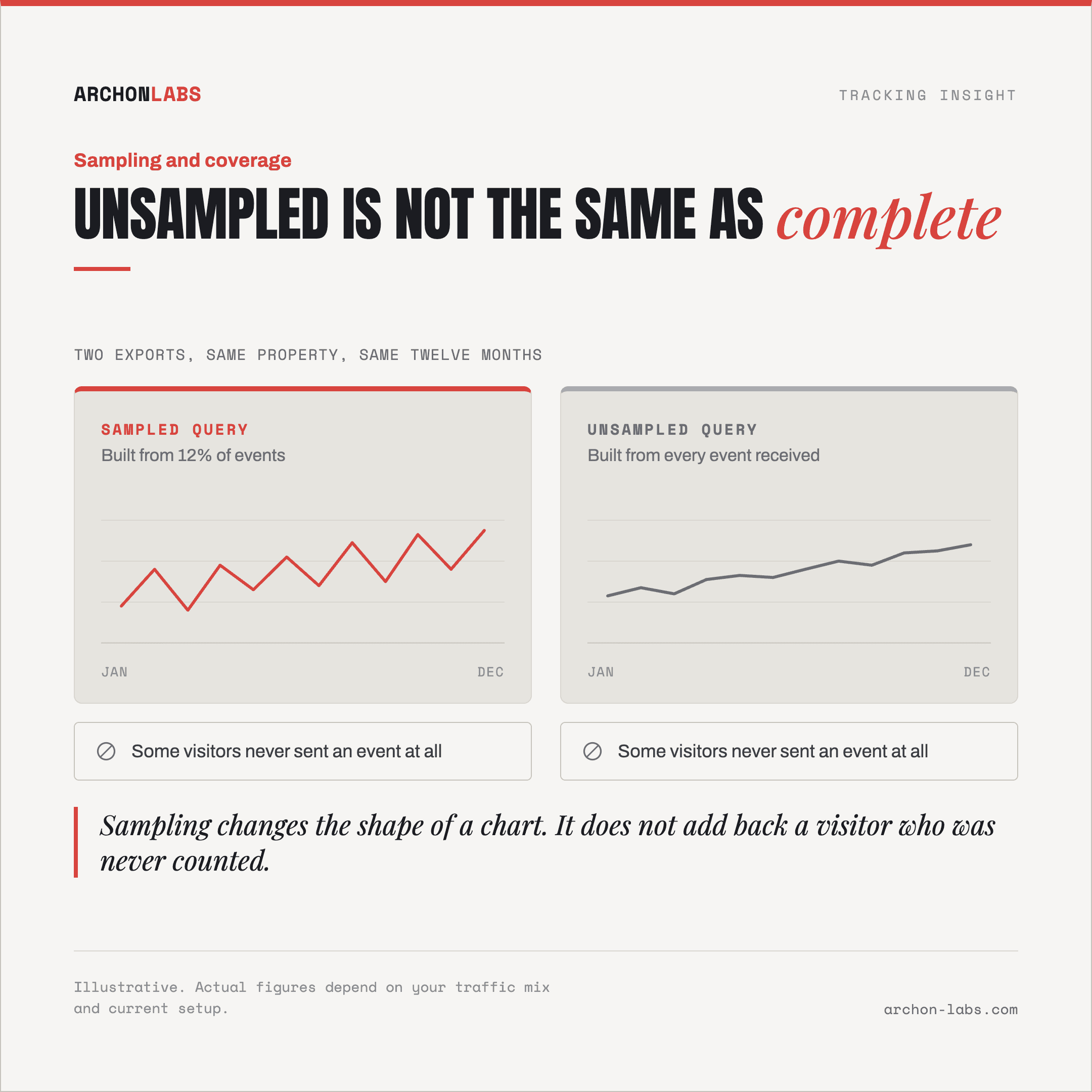
Sampling is the practice of estimating a total from a subset of the underlying events instead of counting every one, applied by an analytics or advertising platform when a query would otherwise have to process more data than it is built to handle at that size. The output is a scaled estimate with a margin of error rather than an exact count, and that error tends to grow as the query is sliced into smaller segments or narrower date ranges. Most platforms flag a sampled result somewhere in the interface, though the flag rarely survives into an exported report or a slide.
Why it matters for agencies
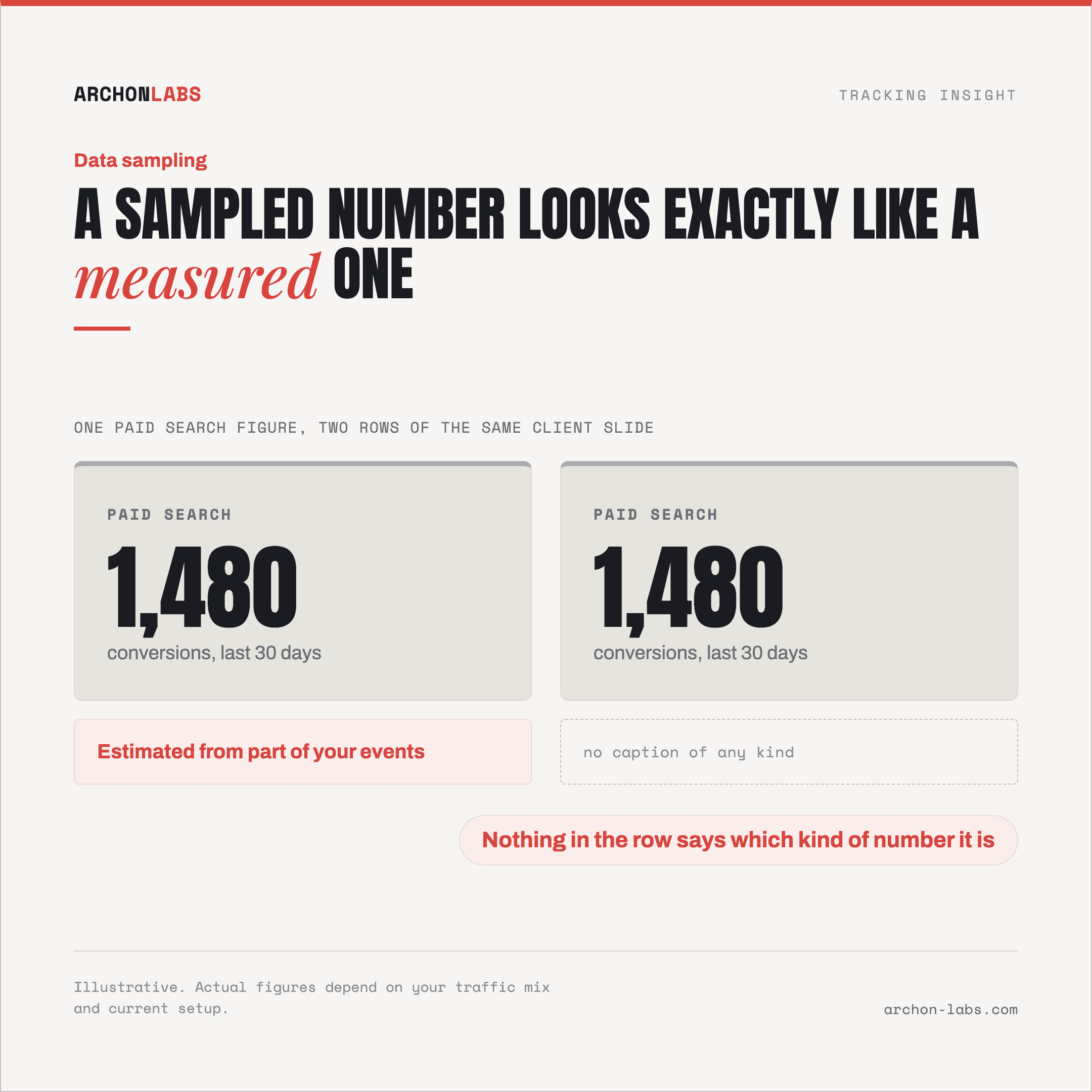
A sampled number in a client report looks exactly as precise as a measured one, same decimal places, same clean row in the table, and nothing in that row says which kind of number it is. Google Analytics 4 is one platform that samples this way, scaling a portion of events into what its own documentation calls a directionally accurate result, and other analytics and advertising platforms apply the same idea under their own names. What decides whether a figure is safe to repeat in a meeting is not the number itself but two questions the report never answers, whether that query sampled at all and how much of the data it used.
What teams get wrong
The recurring mistake is treating a sampled figure as measured because it renders with the same formatting as one. A team pulls a total for a wide date range, gets a clean number, and repeats it in a quarterly review without checking whether that query sampled, then compares it against a narrower range or a smaller segment that sampled differently and treats the gap as a real change. Archon Labs sees this most often in year over year comparisons, where nobody checks whether both years sampled at the same rate until the trend line itself starts to look implausible.
A related mistake is assuming an unsampled figure is therefore the whole underlying total. Sampling only changes how an existing dataset gets estimated, it says nothing about how much of that dataset reached the platform in the first place, so a report that never triggers sampling can still be missing a real share of conversions to consent refusals, ad blockers or browser limits, gaps that existed before sampling ever entered the picture.