First-party data is information a business collects directly from its own audience through channels it controls, such as its website, app, CRM and email list. What makes it first-party is the relationship rather than the technology: the people it describes dealt with that business directly, and it is held under that business's own terms and legal basis. Third-party data, by contrast, is bought or licensed from an outside provider that collected it somewhere else.
Why it matters for agencies
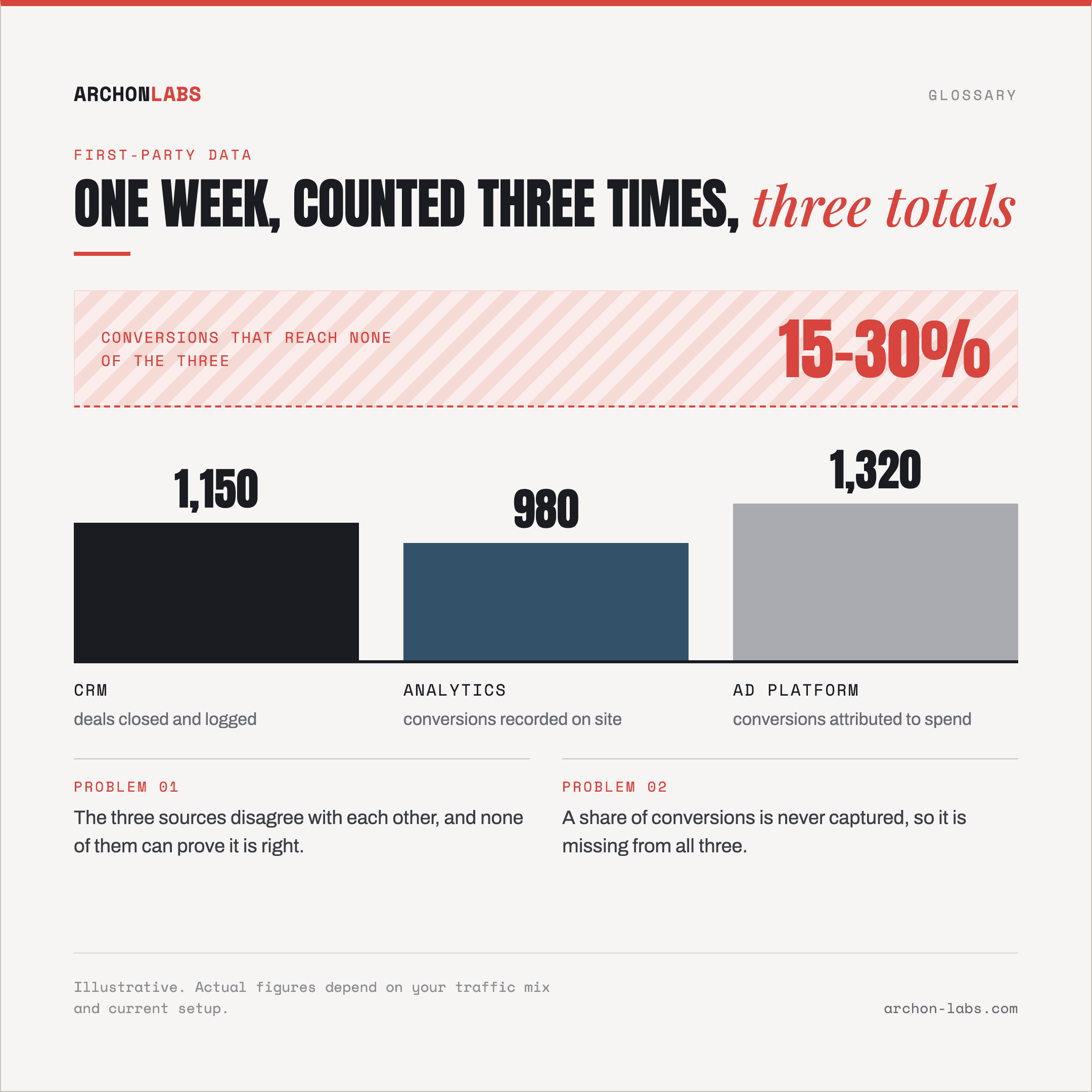
For an agency this is the input every campaign decision runs on. Bidding algorithms optimize against the conversions they are told about, so the quality of a client's own collection sets the ceiling on what the platforms can learn, and 15-30% of conversions are consistently never captured at all. The visible symptom is an argument about numbers: the CRM says one thing, the ad platform says another, and nobody can prove which is right. The label is also narrower than it sounds. First-party describes who the audience dealt with, not whether the data is durable, well collected or lawfully obtained.
What teams get wrong
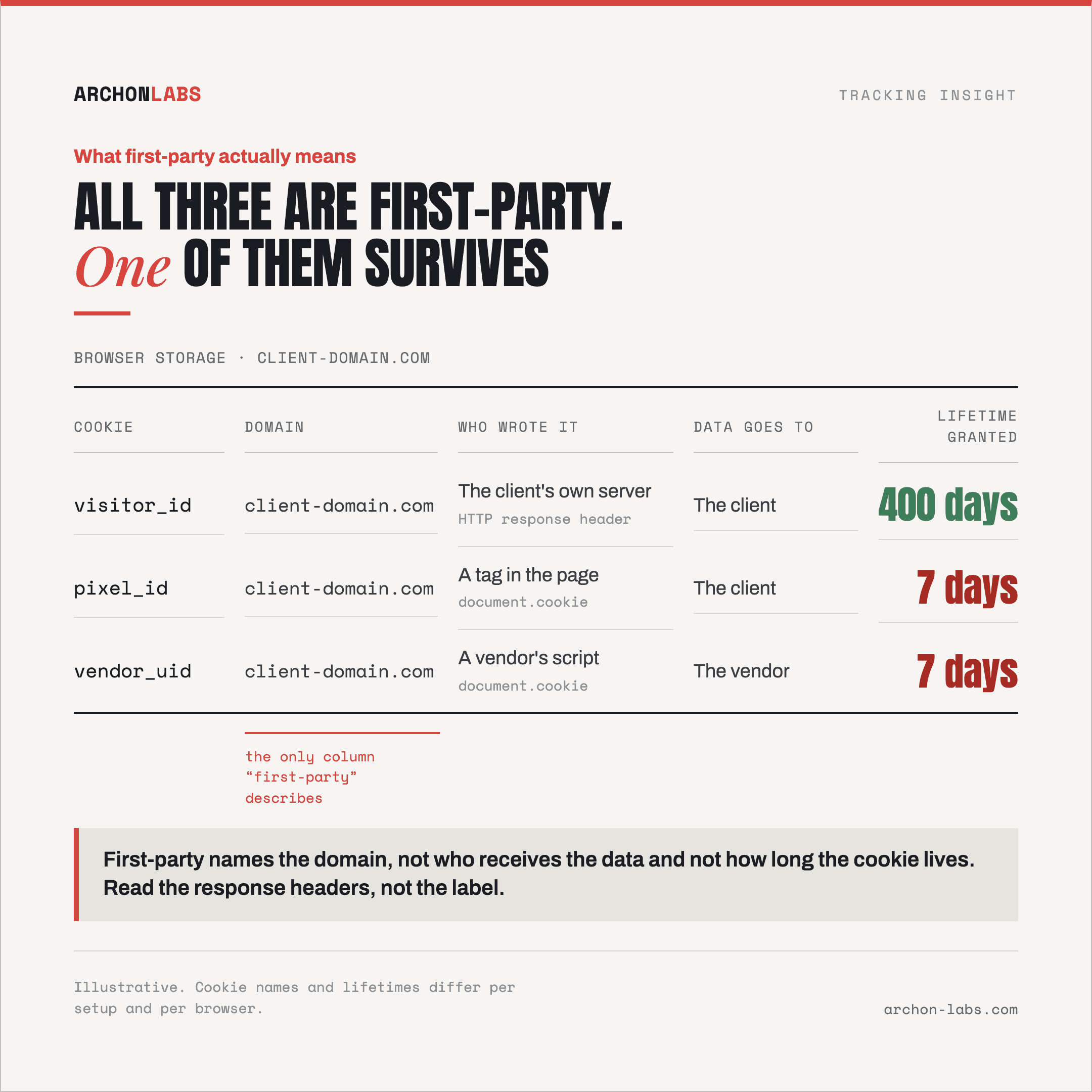
The most common mistake is treating first-party data and a first-party cookie as the same thing, as if moving an identifier onto the client's own domain made it durable. Safari's Intelligent Tracking Prevention treats anything written by JavaScript as script-writable storage and, per WebKit's own announcement, deletes it after seven days without interaction on the site. A cookie set server side in the HTTP response can run up to 400 days rather than 1-7, but only where the subdomain serving it is not CNAME-cloaked, since ITP caps those responses at seven days too. Same domain, same visitor, and no dashboard tells you which one you have.
The second is assuming the label carries a consent exemption. Article 5(3) of the ePrivacy Directive attaches the requirement to storing or reading information on a visitor's device and draws no line between a first-party and a third-party actor, so owning the domain changes nothing about the obligation. The third costs the most: the data is collected and never joined. Sessions sit in analytics, leads in the CRM, spend in the ad platform, and no shared key joins them, so nobody can put revenue against a channel. Most of the first-party data we see at Archon Labs is not missing, it is sitting in systems that were never introduced to each other.