A data layer is a structured JavaScript object on a web page that holds information about the page, the visitor and what they just did, under a fixed set of named keys. Google Tag Manager and gtag.js read that object to decide which tags fire and which values they send, instead of reading them out of the page's HTML. It is the handover point between a website and the tools that measure it.
Why it matters for agencies
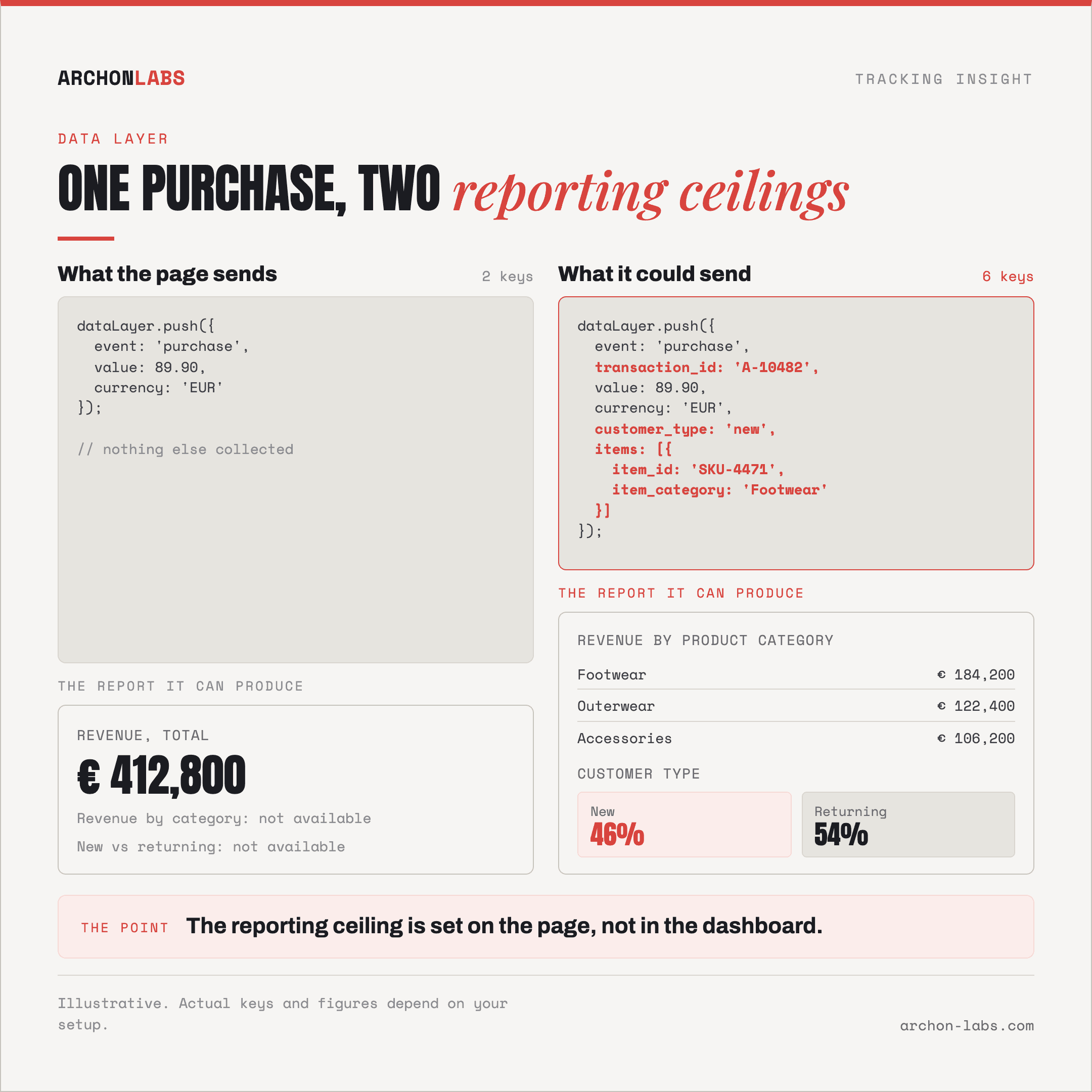
The data layer sets the ceiling on what a client can be reported on at all. A value that is not in it cannot be conjured further down the chain: Google's server-side documentation describes a server container as turning incoming requests into events, so it works with what the browser already sent and cannot invent a margin or a lead type nobody collected. A server-side project can land cleanly while the reporting still looks thin. For an agency the effect is which questions a client can ask, revenue by product category, quote value per form, new customer against returning, and which wait for a developer.
What teams get wrong
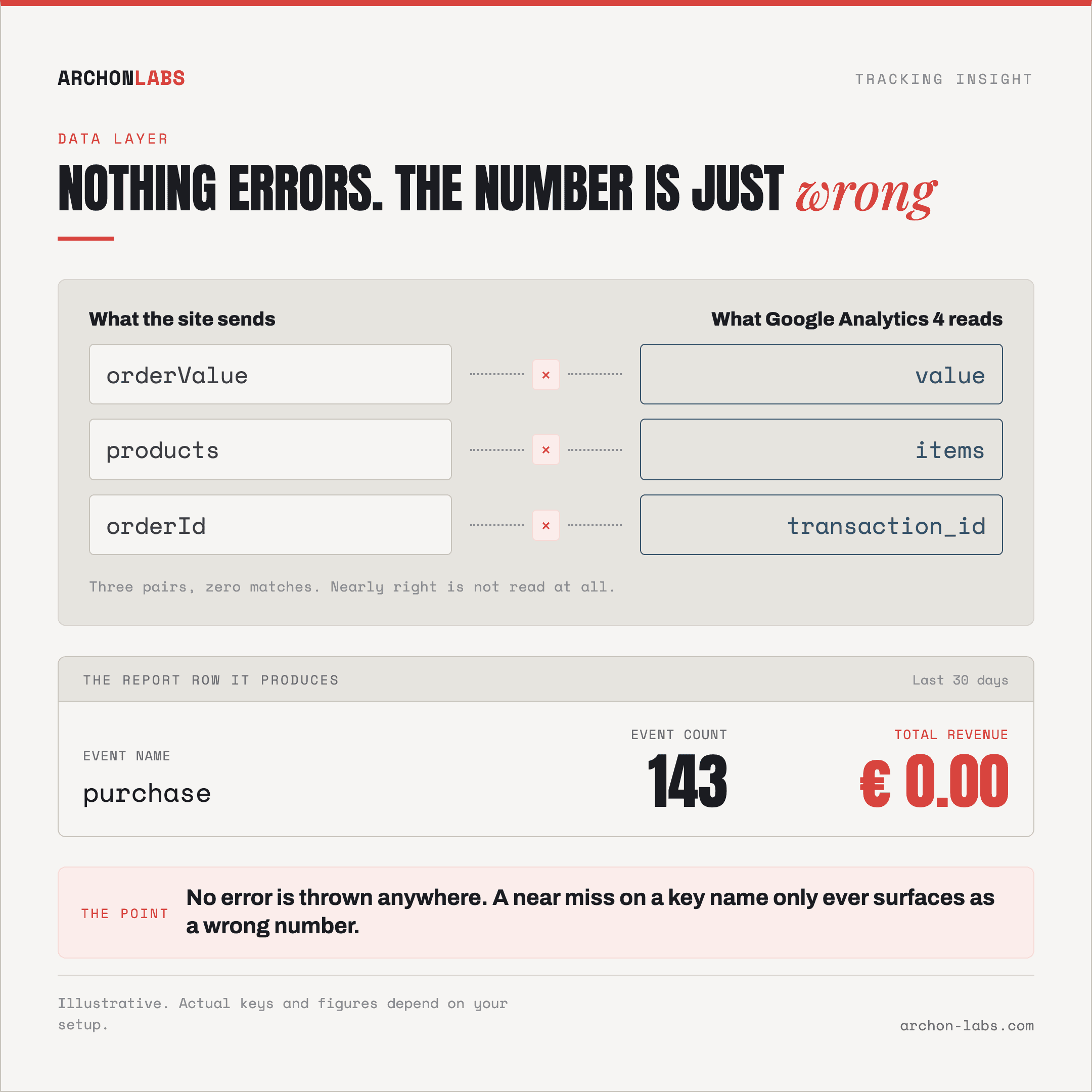
The most common one is assuming Google Tag Manager creates a data layer. It reads one. Where there is nothing to read, triggers fall back to matching CSS selectors and on-screen text, which holds until the next redesign. The second is names that are nearly right. Google Analytics 4 expects exact ecommerce event and parameter names, so orderValue where the tag reads value throws no error anywhere. The event arrives, the conversion count stays believable, and revenue reads zero.
Timing is the one that looks like randomness. Google documents that a push made after the container has loaded is queued, and that the updated value is not guaranteed to be available for the next event, so a tag can read a total that has not landed yet, on some sessions and not others. A form submit that pushes the visitor's email address in clear text is the opposite problem, readable by any script on the page and against Google's policy that no data may be passed which it could recognise as personally identifiable. The last one is ownership: a data layer is a contract between a dev team and a marketing team, and releases rename keys while the dashboards keep drawing lines. Archon Labs treats it as a versioned specification with monitoring on the events, not a finished job.