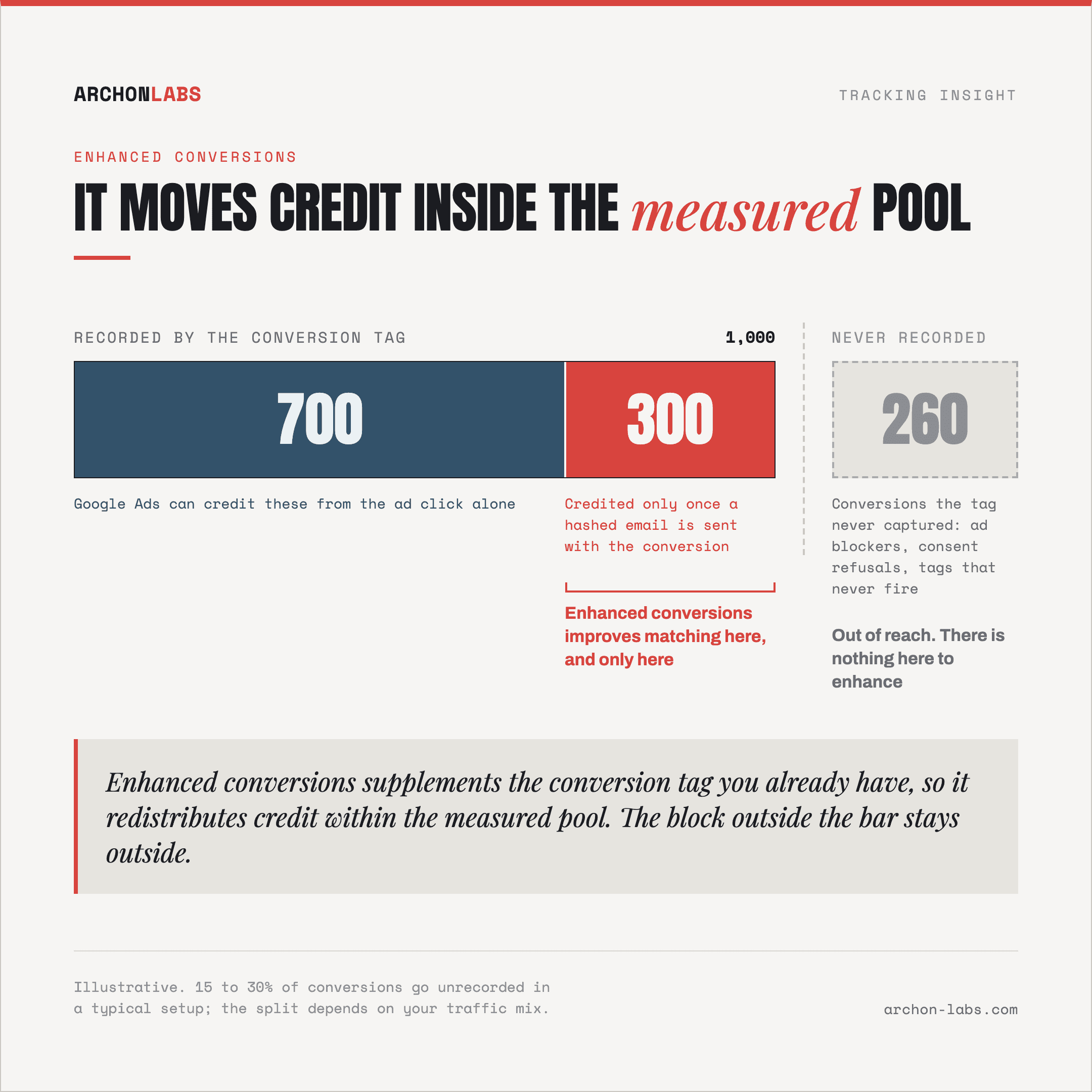
Enhanced conversions is a Google Ads feature that sends hashed first-party customer data, such as an email address or phone number, with a conversion the website already recorded. Google matches that hashed data against accounts a person was signed in to when they engaged with an ad, so a conversion the ad click alone could not tie to a campaign can still be credited to one. It raises the match rate on conversions already measured, it does not collect the ones a site never measured.
Why it matters for agencies
The effect lands in the platform report, not the analytics tool. A conversion the site recorded but Google could not tie back to a click is one the bidding algorithm never learns from, so the campaign optimises on fewer examples than the client's real sales. Enhanced conversions closes part of that gap without new tags, which is why the interface keeps offering it. What it cannot change is the size of that pool: Google describes it as supplementing an existing conversion tag, so the 15-30% of conversions that are never recorded sit outside its reach.
What teams get wrong
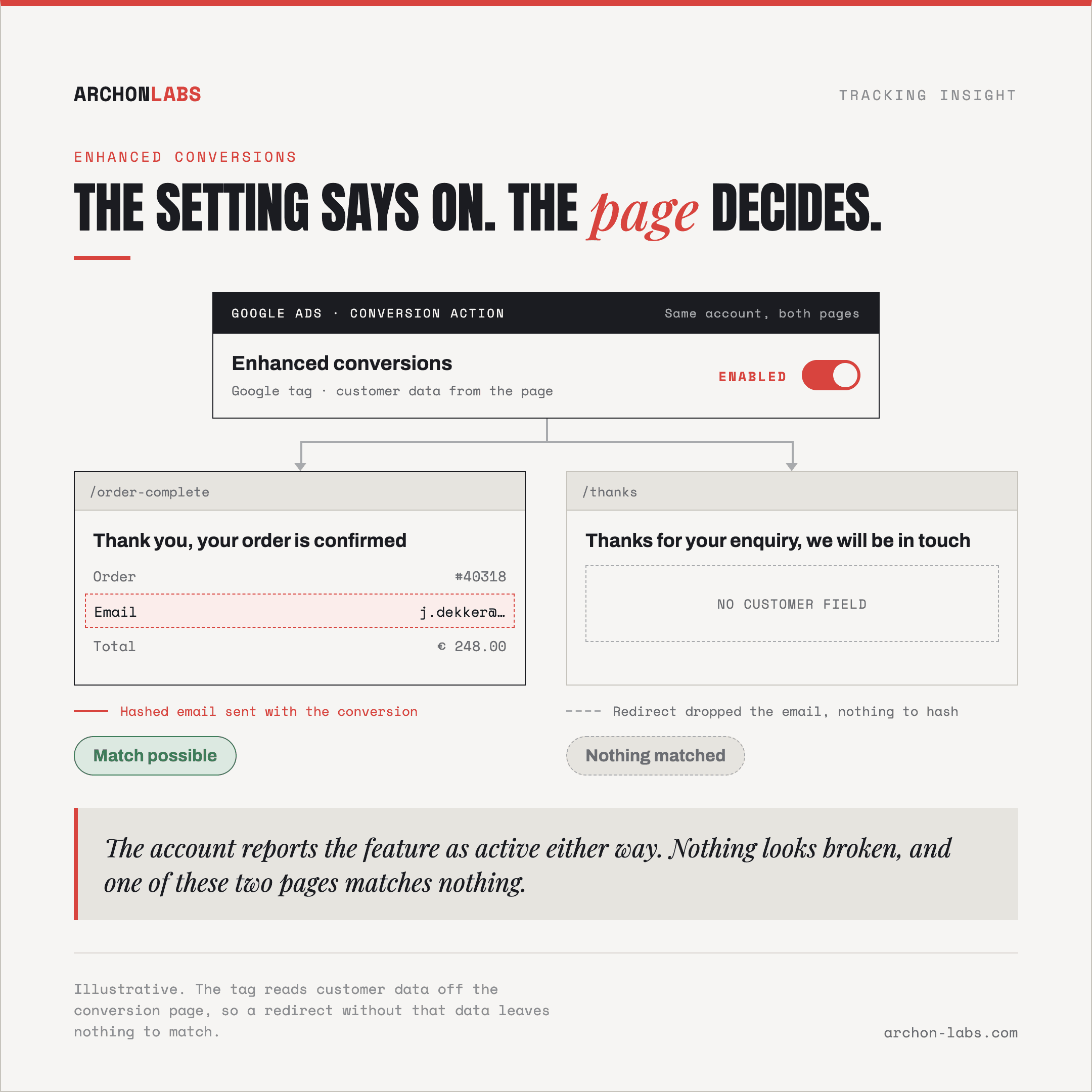
The costly misreading is buying it as a recovery feature. It improves matching on conversions the tag already sent, so switching it on to win back what ad blockers and consent refusals removed returns little: those events never reached Google to be enhanced. The second is not noticing it is enabled and matching nothing. The tag-based setup reads customer data off the conversion page, and plenty of lead-gen sites redirect to a thank-you page that no longer holds the email address. The account still shows the feature as active, so nothing looks broken. Google's API path sends that data up to 24 hours afterwards, which exists because the page does not always carry it, but that is a build, not a checkbox.
The third is vocabulary. Enhanced conversions, the Conversions API and server-side tracking get used as three names for one thing. They are layers: server-side tracking changes where an event is sent from, the Conversions API is the channel a platform accepts it on, and enhanced conversions is the identifying data attached to it. Meta's counterpart is advanced matching, a separate feature with its own fields, so a correct Google Ads setup is not automatically correct in Meta. Archon Labs checks the data is present when the conversion fires before any of it is switched on.