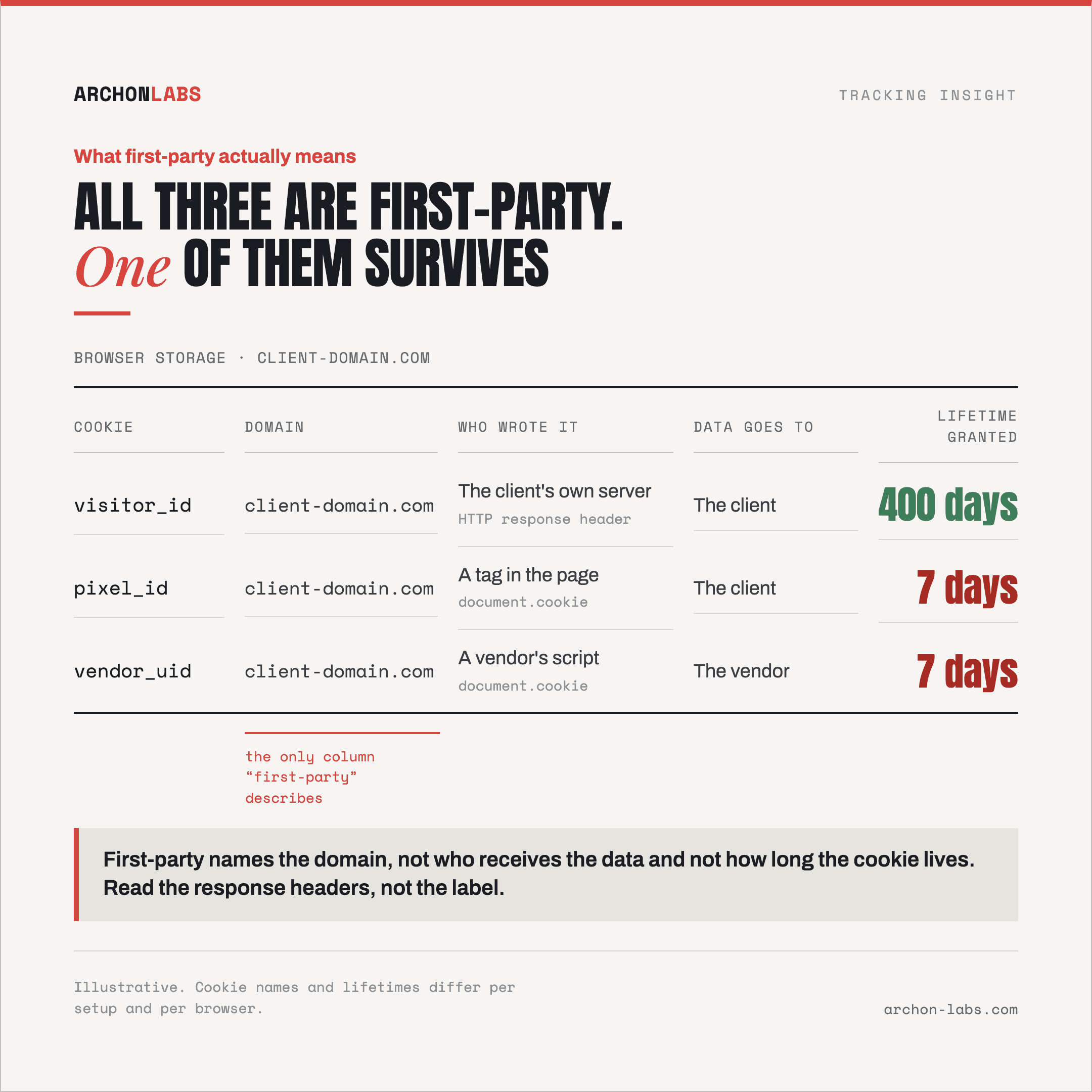
A first-party cookie is a small piece of data a browser stores under the same domain as the site the visitor is currently on, and sends back with each later request to that domain. A cookie is third-party instead when its domain differs from the site in the address bar. Sites use first-party cookies to keep someone logged in, hold a basket, remember a preference and recognise a returning visitor.
Why it matters for agencies
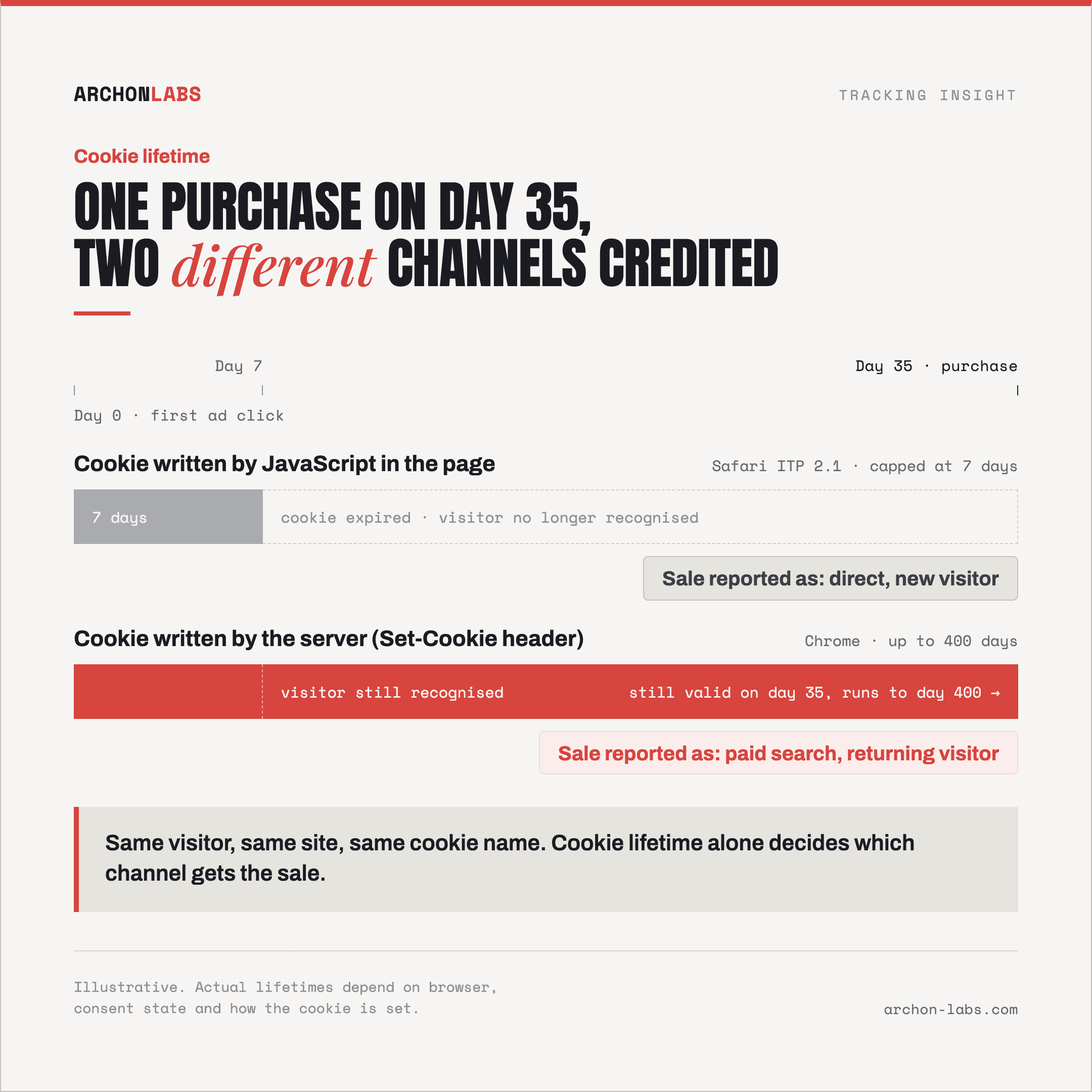
For an agency the useful question is not what the cookie is called but how long it survives, because that number is the real length of every attribution window. Safari caps persistent cookies created through JavaScript at seven days, per WebKit's own ITP 2.1 announcement, while Chrome allows a cookie to run up to 400 days from the moment it is set. Same visitor, same site, same cookie name, and the difference between 1-7 days and 400 days decides what a client's report can see. It bites hardest on long consideration cycles: a lead that converts five weeks after the first ad click is a brand new direct visit if the cookie died on day seven, and the campaign that earned it gets no credit.
What teams get wrong
First-party names the domain the cookie sits on and nothing else. It does not say who receives the data: any script on a page can write on that page's domain, and Google's documentation confirms that the GA4 JavaScript tags use first-party cookies while the data still goes to Google. It does not say how long the cookie lives, and it does not say the setup is compliant. Per Mozilla's documentation, the whole test is whether the cookie's domain and scheme match the page in the address bar.
The second is the reason teams give for caring. Plenty of first-party projects were sold on third-party cookies disappearing, and Google confirmed in April 2025 that Chrome is keeping them. The deadline was cancelled, the lifetime problem was not. The third one costs money. Two cookies with the same name on the same domain behave differently depending on whether JavaScript or the server's HTTP response wrote them, and Safari puts a CNAME-cloaked subdomain back at seven days even when the server set it. No dashboard shows you which one you have, which is why at Archon Labs a cookie check means reading the response headers rather than trusting the label.