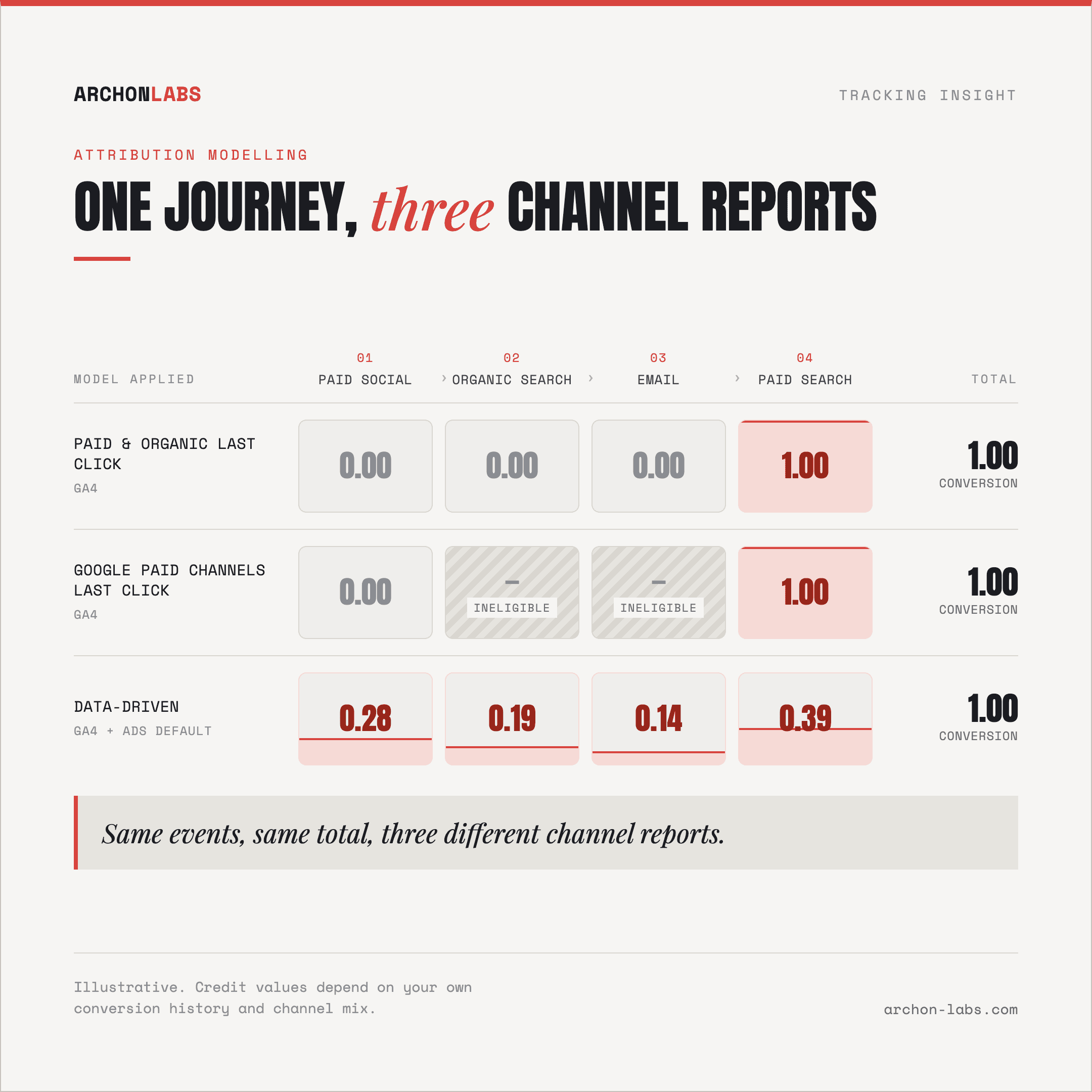
An attribution model is the rule a reporting or advertising platform uses to divide credit for one conversion across the touchpoints that came before it, from giving all of it to the last click to spreading it across several channels. It governs how credit is distributed rather than how much was measured, so two models can disagree about which channel earned a sale without either having seen a different set of events. Changing the model changes the story a report tells about the same events.
Why it matters for agencies
The channel split in a client report is a model output, not a measurement. Google Analytics 4 offers three models in its attribution reports, data-driven, paid and organic last click, and Google paid channels last click, while Google Ads offers last click and data-driven, where data-driven is the default for most conversion actions. Its weights come from the account's own past conversion paths, so a thin or patchy history produces weights built on that history, and two accounts running comparable campaigns can credit the same channel differently. That is what makes the model a reporting decision rather than a technical setting: when a client asks why email earned less credit this quarter, the answer is often that nothing about email changed.
What teams get wrong
The most common mistake is a debate about a menu that no longer exists. Google withdrew the first click, linear, time decay and position-based models from Google Analytics 4 and Google Ads in November 2023, so an agency still weighing six models in a spreadsheet is choosing between options the interface no longer offers. Accounts that ran position-based or time decay were moved off them, so a year-on-year channel report spanning that change compares two different credit rules and reads on screen as a channel that suddenly performed differently.
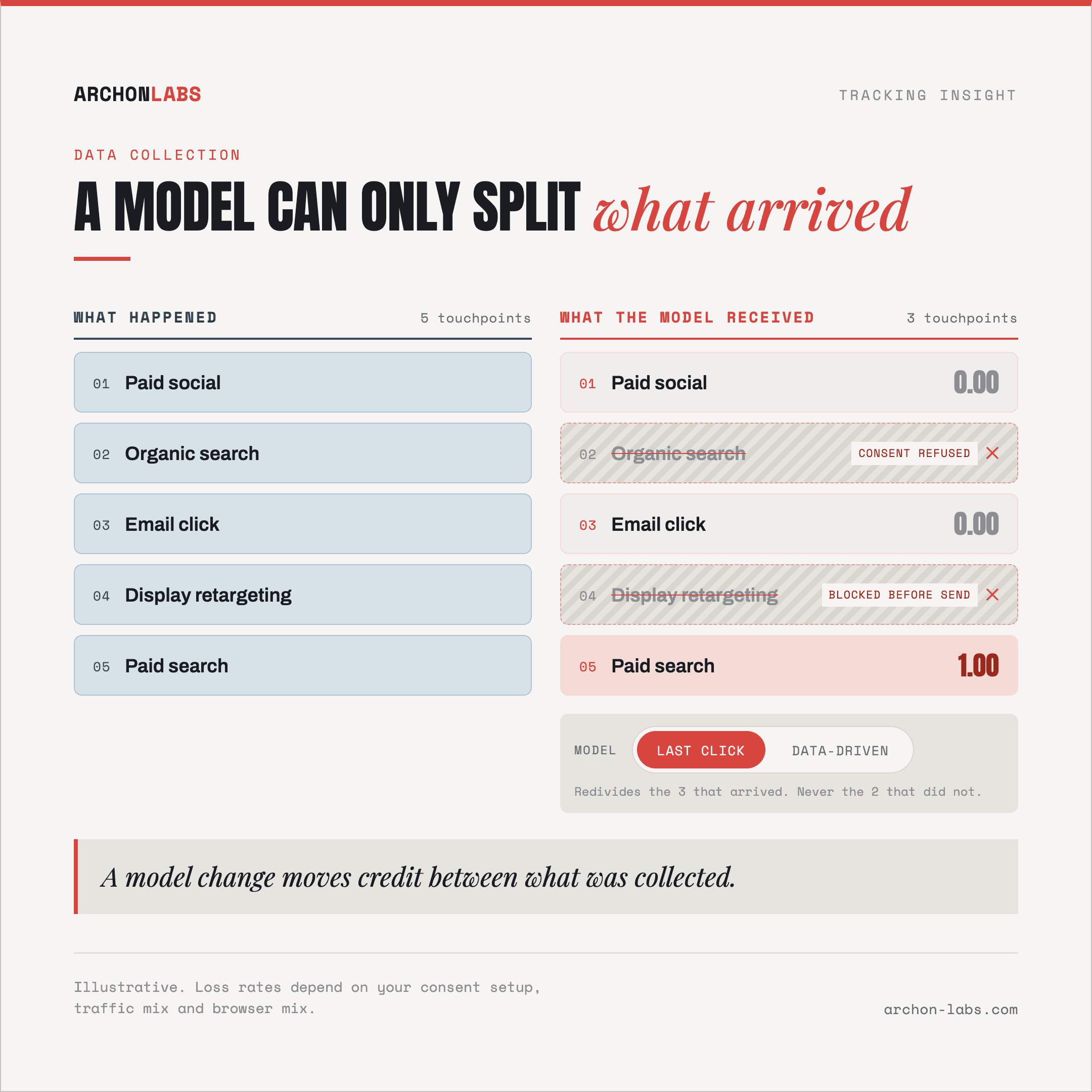
The deeper mistake is reaching for a model change when conversions are missing. A model redistributes credit across the touchpoints that were recorded and cannot credit one that never arrived, so consent refusals, ad blockers and browser cookie limits settle the input before any model runs. With 15-30% of conversions consistently uncaptured, months of model tuning can sit on a collection layer nobody has audited, and Archon Labs finds that order reversed on most setups it looks at.