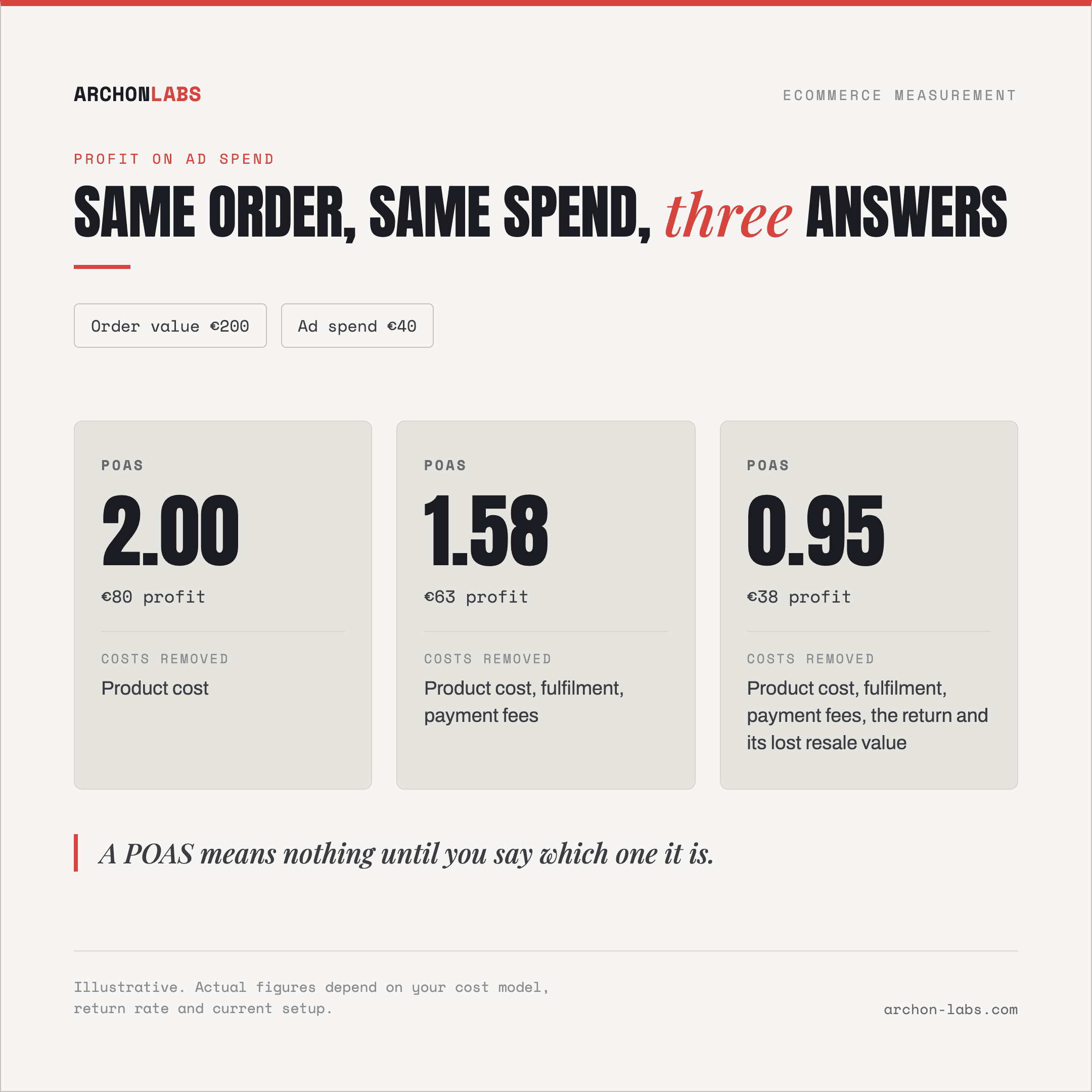
POAS, or profit on ad spend, divides the profit an advertising channel produced by the ad spend that produced it, where ROAS divides revenue by that same spend. It is not one number: what counts as profit depends on which costs are subtracted first, and most reported POAS figures subtract only the cost of the goods. An ad platform cannot calculate it on its own, because it knows what an order was worth and nothing about what fulfilling that order cost.
Why it matters for agencies
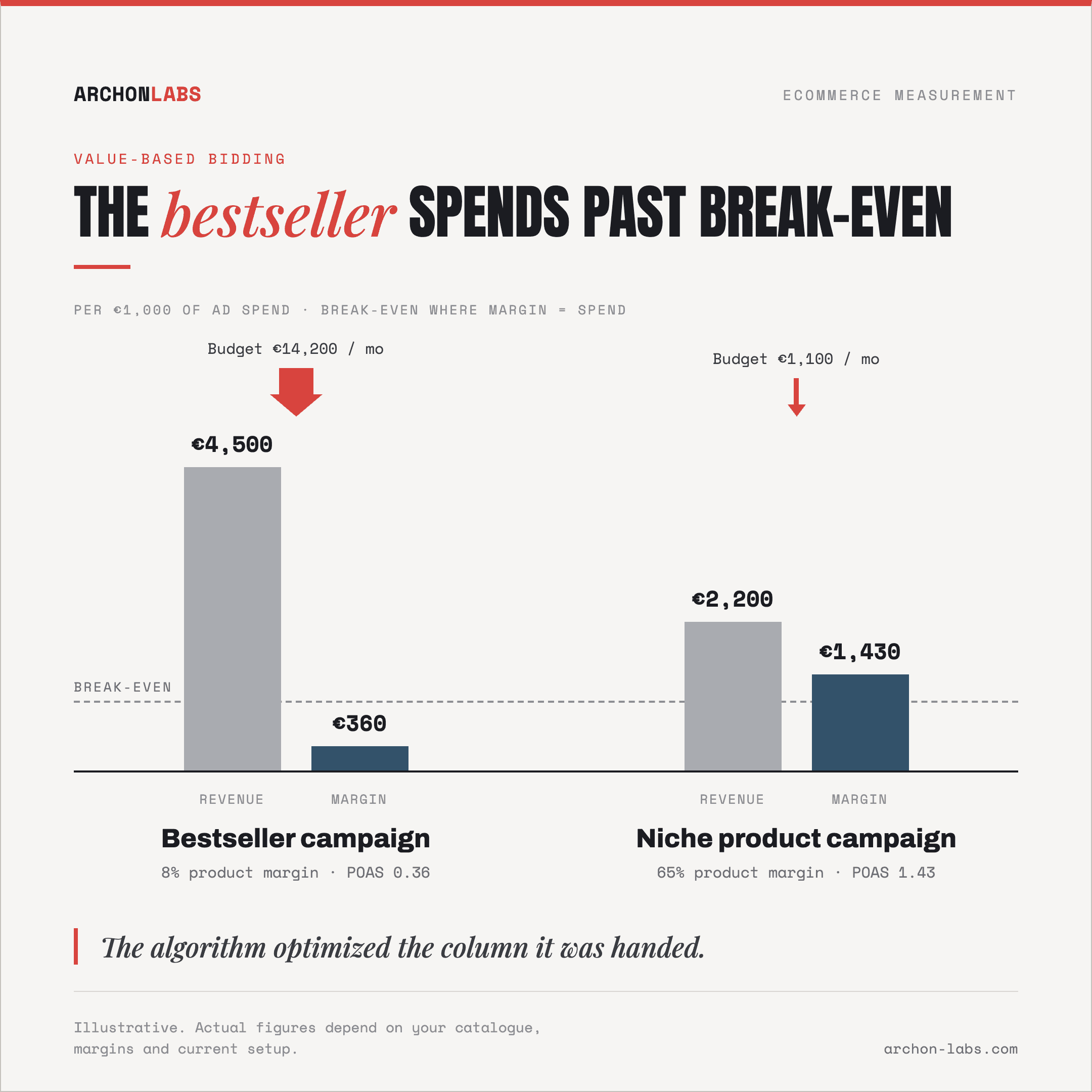
An ad platform optimizes the number it is sent. Google describes value-based bidding as predicting future conversions and their values from the conversion values you report, and that value is order revenue by default, so in a catalogue where margin varies by product the algorithm is free to spend a client's budget on the bestsellers that earn the least. Swapping revenue for margin repairs the top half of the division and leaves the bottom half untouched, and the bottom half is the one no report questions: ad spend is only the portion of marketing cost that arrived as a platform invoice, with tooling, freelancers, in-house marketing salaries and the agency's own fee sitting outside it. That is how a reported profit improvement can quietly cost more than it returned.
What teams get wrong
The layer, first. Product margin is the first thing subtracted from an order, not the last. That order still has to be picked, packed and shipped, the payment provider takes its cut, and a share of it comes back, where the return costs the inbound shipping, the handling and part of the resale value of the goods. One order therefore produces three different profit figures, and the one that fits inside a product feed is the shallowest of the three. It gets reported as profit, unlabelled, and budget decisions are made on it.
Second, both metrics close the books at the first transaction, so a customer who orders again and a customer who never returns count the same. Underneath all of it sits the layer Archon Labs finds unchecked most often: with 15-30% of conversions consistently uncaptured, a POAS is precise arithmetic performed on the orders that happened to be measured. Teams audit the margin file and never the revenue it is subtracted from.