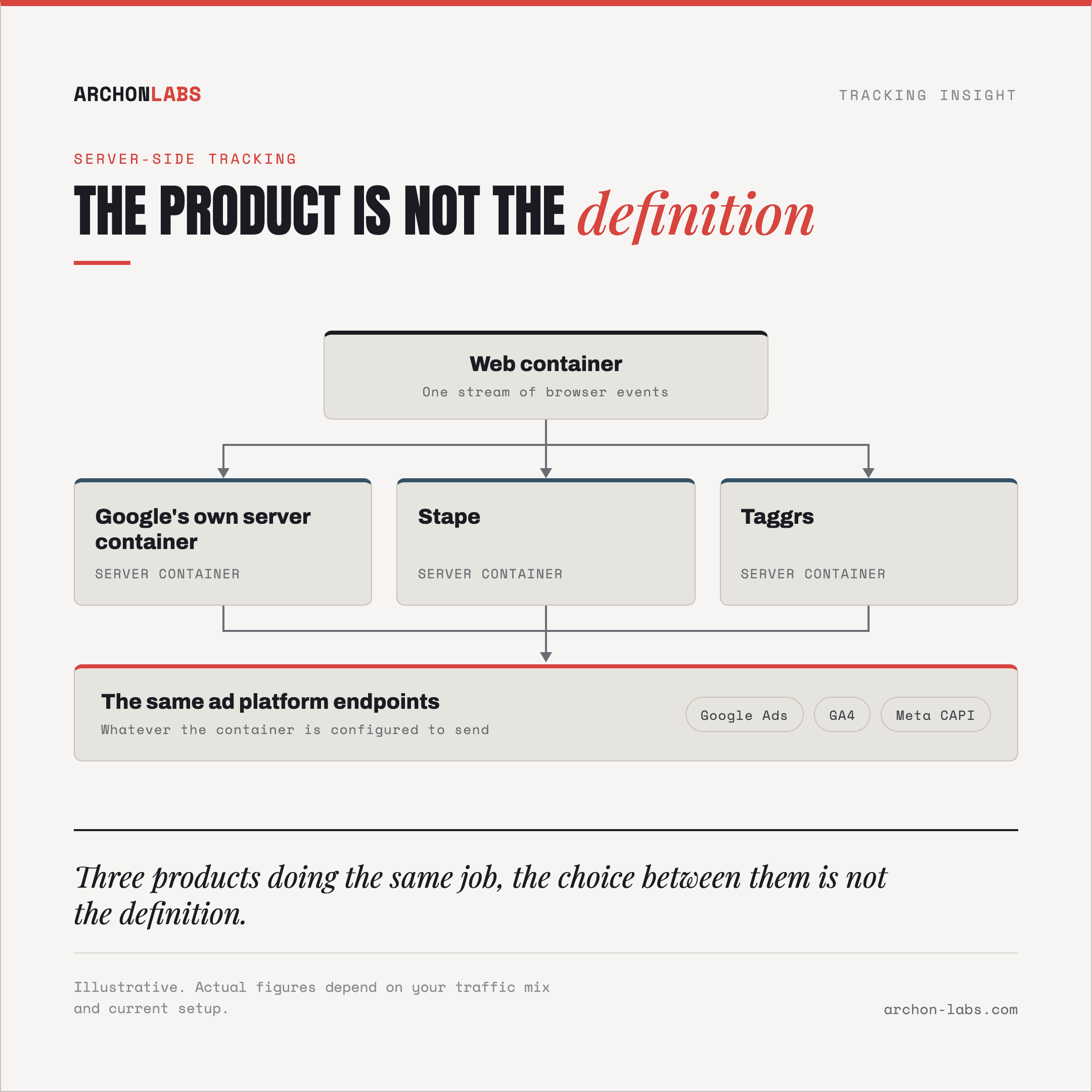
Server-side Google Tag Manager, often written sGTM, is a Tag Manager container that runs on a server you host, most often on Google Cloud, instead of running in the visitor's browser. It receives the HTTP requests generated by the web container's tags, then processes and forwards that data on to Google Ads, GA4, Meta and other endpoints, using the same tag, trigger and variable model as a standard container. It is one specific tool for doing server-side tracking, not the technique itself, and other server containers do the same underlying job.
Why it matters for agencies
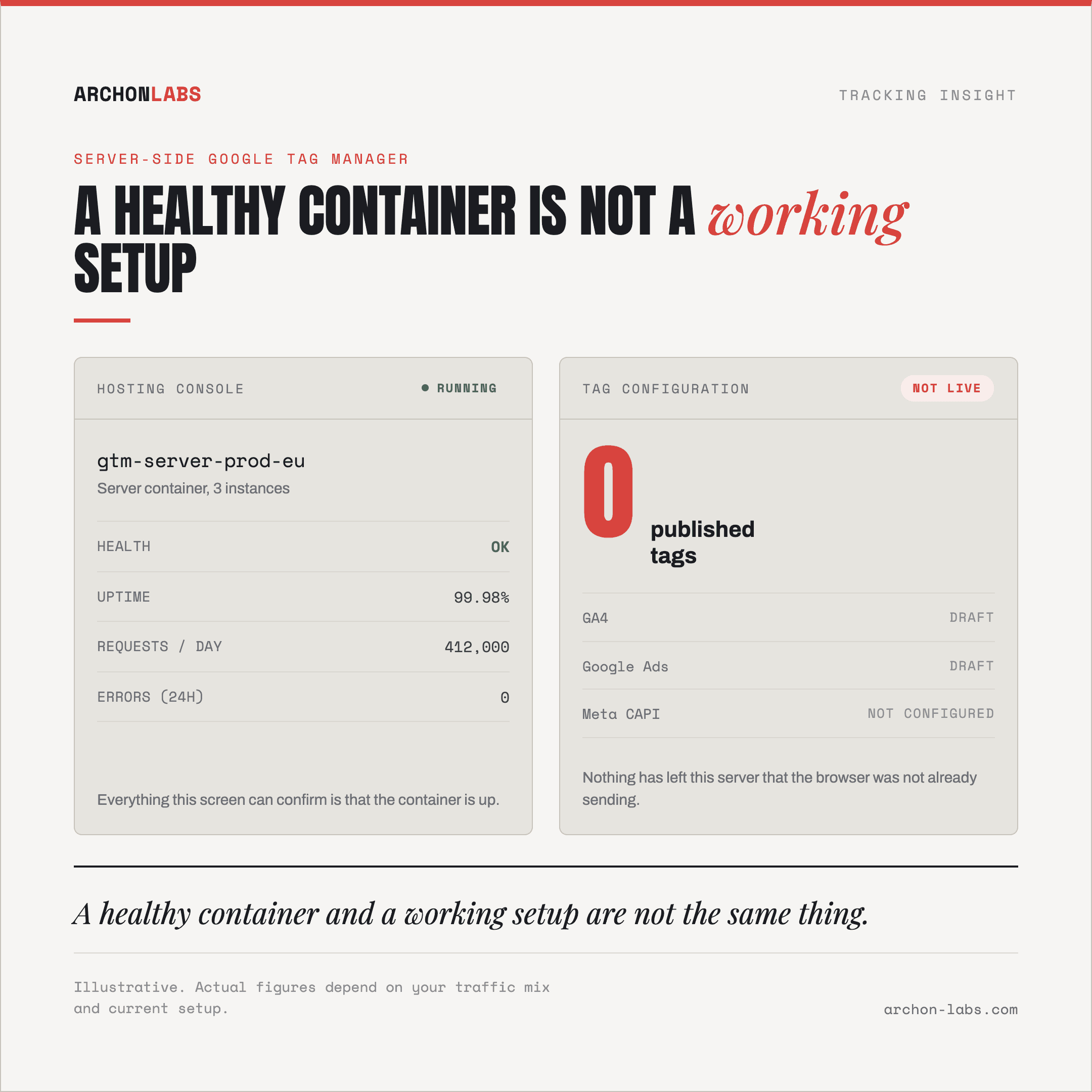
For an agency, server-side Google Tag Manager usually enters the conversation because a client's own developers, or a previous agency, already spun one up and treat that as the finished job. A container showing healthy in the hosting console cannot tell you what is actually inside it: whether the tags are published, whether consent state is respected, or whether what leaves the server is any different from what the browser was already sending. A client who points at a running container as proof of proper tracking is describing infrastructure, not a result, and the conversation an agency actually needs to have is about what that container is configured to send.
What teams get wrong
The most common mistake is reading a healthy status in the hosting console as confirmation the setup works. Google's own comparison of client-side and server-side tagging describes the server container as accepting the HTTP requests the web container's tags generate, then building and sending vendor-specific requests on from there, nothing more than that. A container can run cleanly for months while the tags inside it are unpublished, misconfigured, or still forwarding the same incomplete browser data, so a status page answers a different question than whether the data reaching Google Ads or GA4 is any good.
The second is treating server-side Google Tag Manager as a synonym for server-side tracking itself. It is one specific product, built on Google's own tag, trigger and variable model, and Archon Labs works with agencies running the identical underlying approach through Stape, Taggrs or a self-built endpoint instead. Assuming the technique requires this particular tool, or that switching products alone changes what gets measured, mistakes the delivery mechanism for the decision that actually matters, what the container is told to send.