Conversion modelling is a machine learning technique that estimates conversions or user behaviour a platform could not directly observe, usually because a visitor declined analytics or advertising cookies, by learning the patterns of consenting visitors and applying them to the ones who declined. Google Ads and Google Analytics 4 each run their own version, training only on the traffic inside that account rather than sharing one model across advertisers. The result is a statistical estimate blended into reports next to directly measured numbers, not a recovered record of what one specific denied visitor did.
Why it matters for agencies
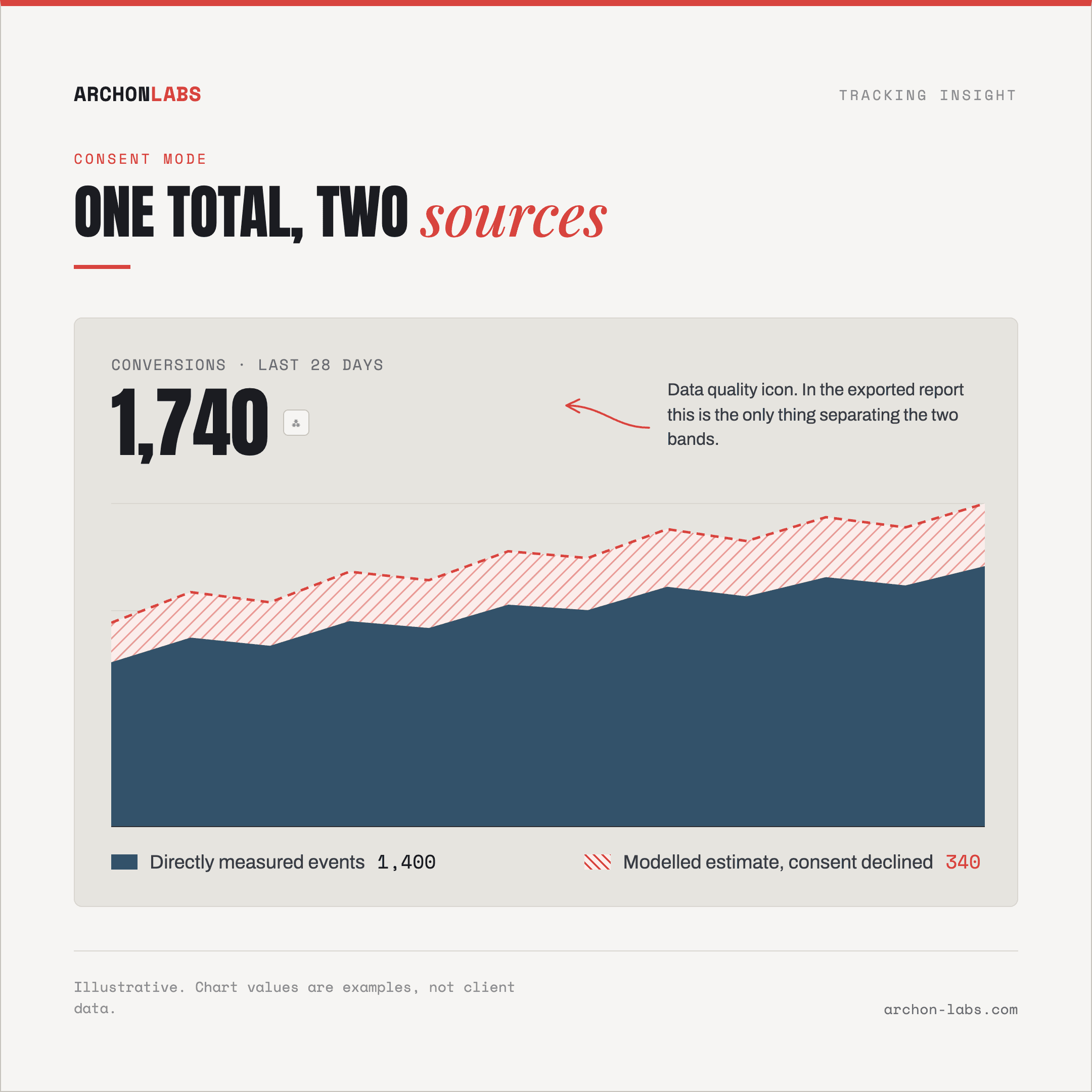
For an agency, conversion modelling is the layer that fills the gap consent mode leaves once tracking is compliant but a share of visitors still decline. Google's own description of GA4's approach states it uses machine learning to model the behaviour of users who decline analytics cookies based on the behaviour of similar users who accept them. That estimate lands in the same report as directly measured events, told apart mainly by a data quality icon, so a client reading the total sees one number and has to dig to know which part a model produced.
What teams get wrong
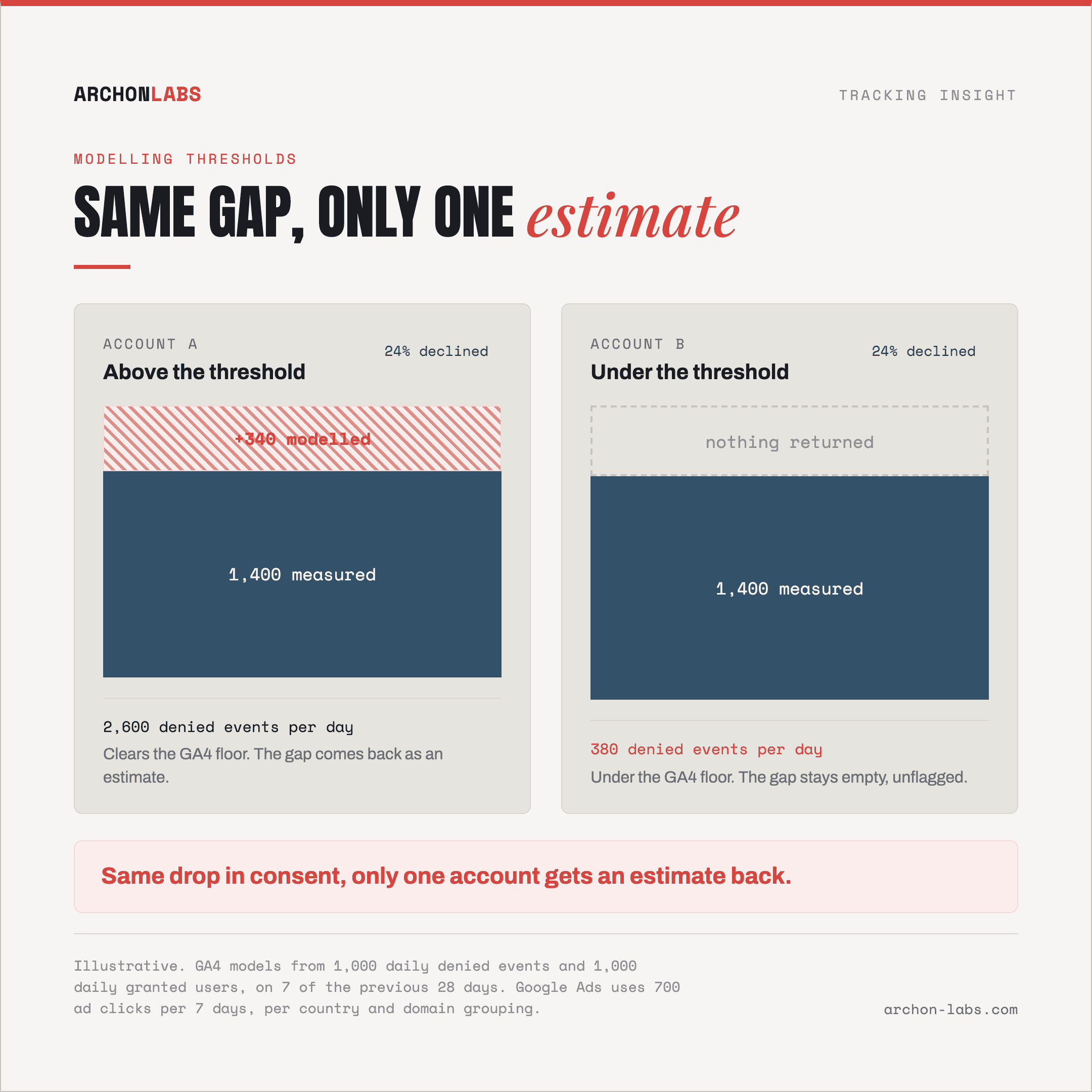
The most common mistake is assuming conversion modelling activates the moment consent mode is switched on. It does not: both platforms gate it behind an observed-data threshold. GA4 requires at least 1,000 daily events with consent denied and at least 1,000 daily users with consent granted for seven of the previous 28 days before it will model anything, and Google Ads sets its own threshold at 700 ad clicks over a rolling seven day period, per country and domain grouping. A smaller market or a modest budget can sit under those thresholds indefinitely, and a declined visitor's conversion is then simply absent from the report, with nothing in the interface flagging the difference.
A second, less visible mistake is treating the model as if it reconstructs an individual. Google is explicit that it estimates aggregate behaviour from consenting users and applies the pattern to the group who did not consent, it is not a record of what one denied visitor did. Archon Labs sees this most often when a modelled total gets quoted in a client meeting as though a specific missing conversion had been found, when a pattern learned elsewhere was applied to a gap instead.