Anomaly detection is a statistical technique that compares a metric against the range a model predicts from that metric's own history, then flags any datapoint whose observed value falls outside that range. Because the prediction carries the weekday and seasonal pattern of the account it learned from, the boundary moves with the metric instead of sitting at a number somebody chose. What it reports is that a value is unusual for this account, never what caused it.
Why it matters for agencies
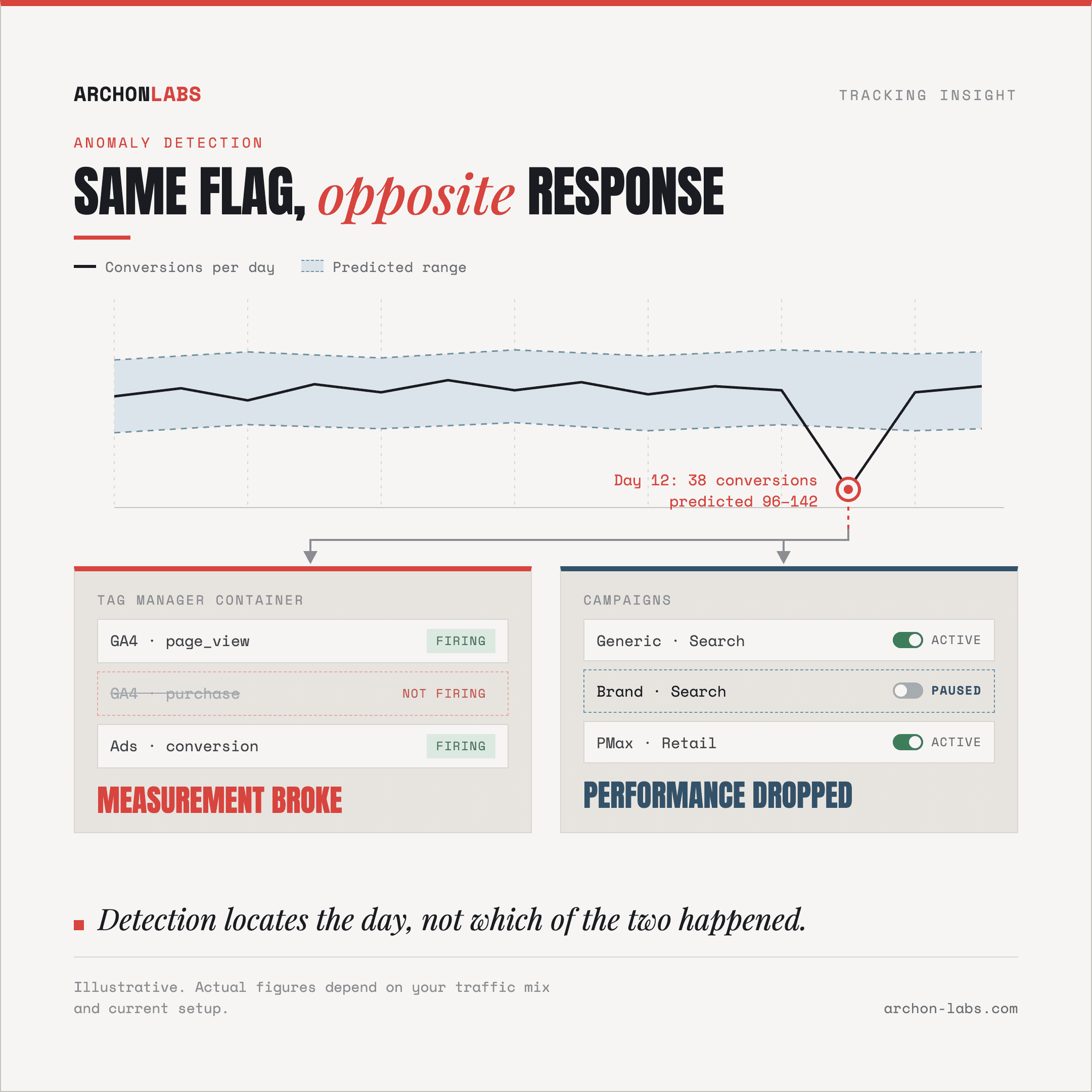
A flag is a question, not a diagnosis. A conversion count outside its predicted range means either that the measurement broke or that the performance did, and from inside the data a tag that stopped firing and a paused campaign produce the same shape on the same chart. One is a fix nobody outside the team needs to hear about, the other is a conversation with the client, and detection points at the day, not at which of the two happened. Google documents its own implementation as that narrow: Analytics Intelligence fits a Bayesian state-space time series model to the historic data and flags the datapoint that falls outside its credible interval, which is a statement about a number and nothing more.
What teams get wrong
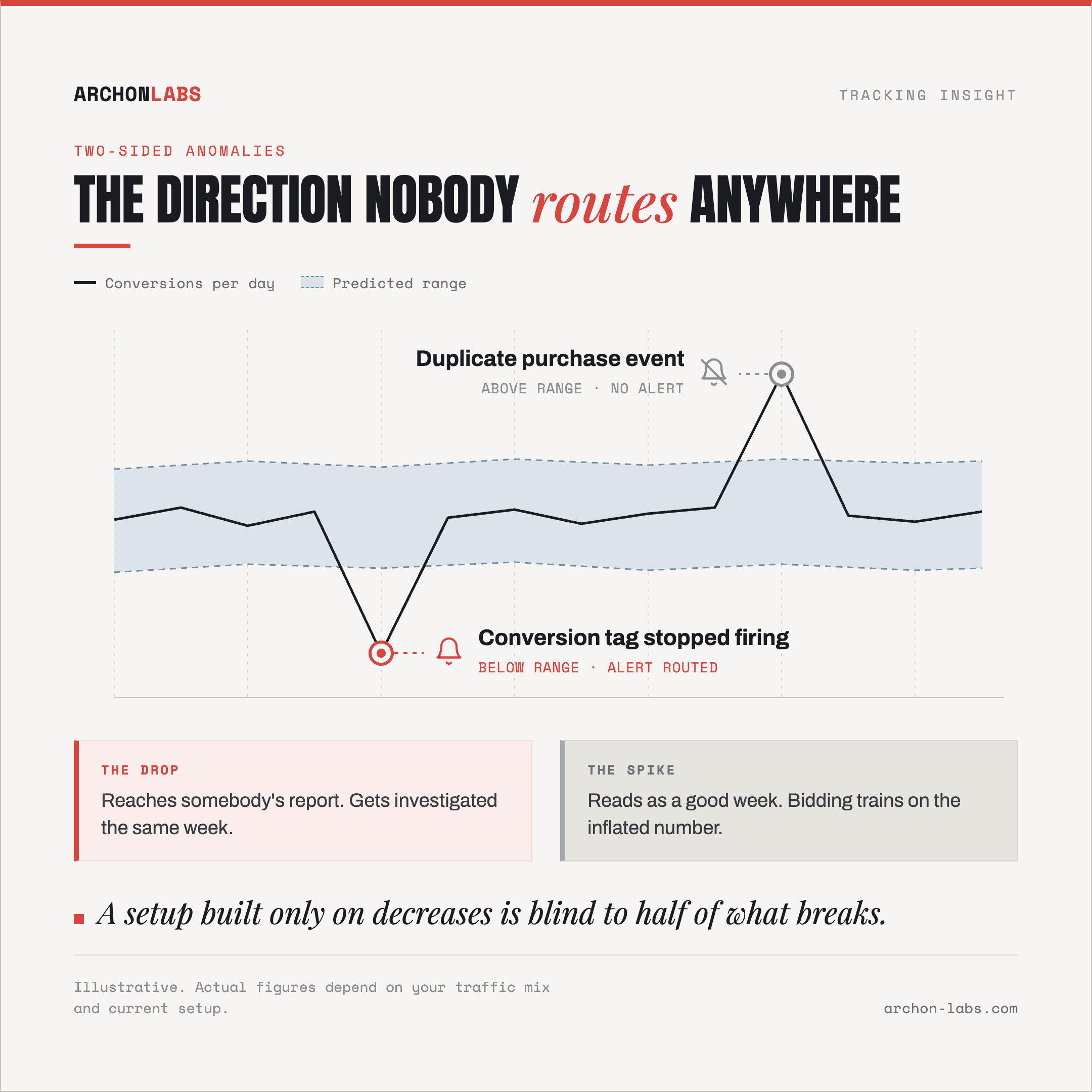
The most common mistake is watching one direction. Setups get built around a decrease, because a drop is what everyone fears, and an anomaly is two-sided: a container migrated twice, a purchase event firing client-side and server-side at once, a lead form worked over by bots, and the count goes up instead. It reads as a good week, nobody investigates a good week, and bidding trains on the inflated number for as long as it lasts. In the accounts Archon Labs audits the upward anomaly outlives the downward one, because a drop eventually reaches somebody's report and a spike never does.
The second is expecting detection where there is no history to detect against. Google trains daily detection on the previous 90 days, hourly on two weeks and weekly on 32 weeks, so a property opened this month or a conversion action created for a new campaign has no baseline to be an outlier from. Launches, replatforms and new accounts are the moments a setup is least trustworthy and the moments the technique has least to work with, which is a limit worth stating plainly.