AI-ready data is marketing data an AI tool can query and interpret correctly without a person translating it first, which is a higher bar than putting it somewhere a model can reach. It needs a collection layer that is not quietly dropping conversions, a written definition for every metric and dimension so one question has one answer, and no personal data sitting in fields nobody has inspected. Availability is a storage problem, readiness is a definitions problem.
Why it matters for agencies
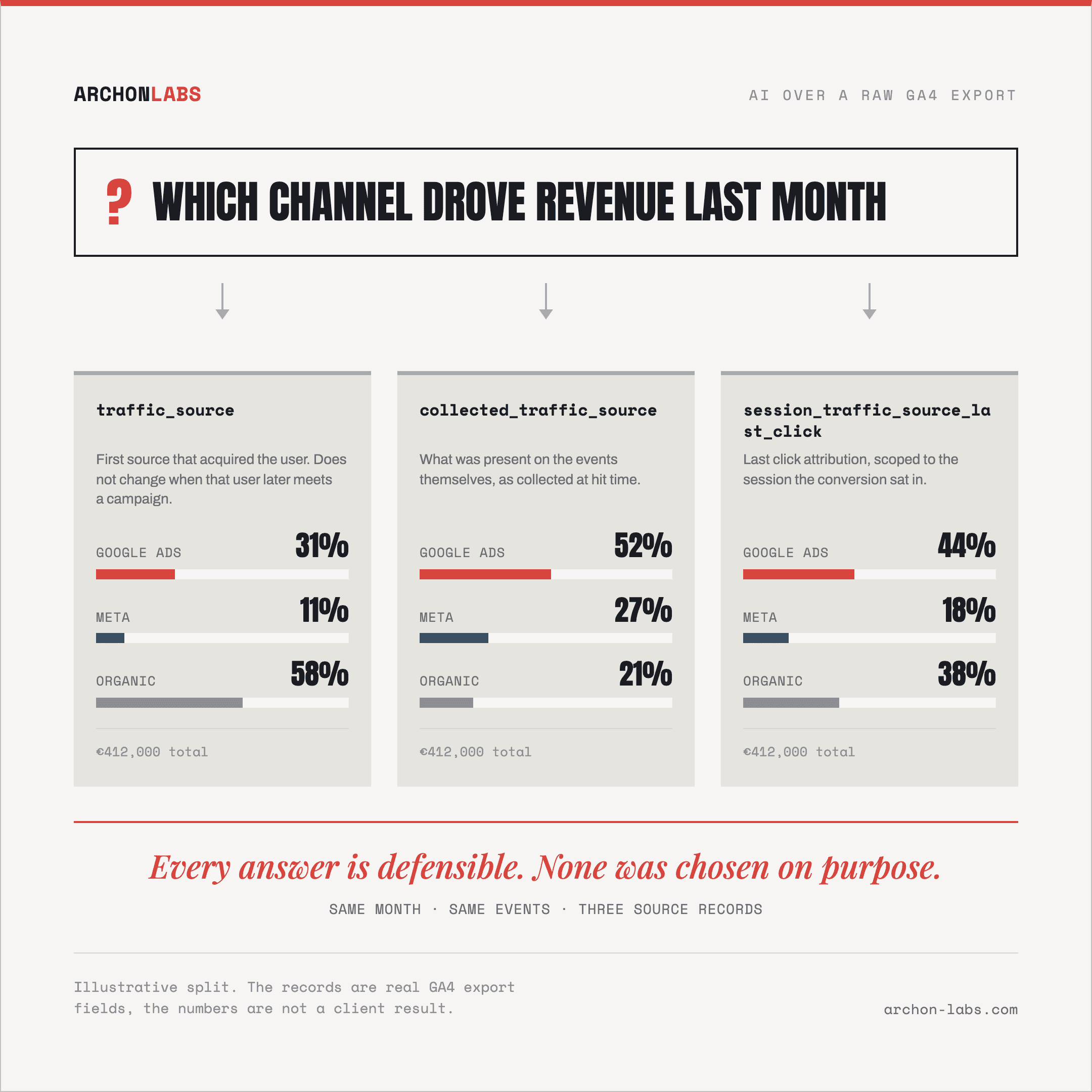
The risk is not that the AI refuses to answer, it is that it always answers. Ask which channel drove revenue last month, and a tool pointed at a raw GA4 export in BigQuery has three traffic-source records to choose between, which Google's schema documents as three different things: traffic_source is the source that first acquired the user and does not change when that user meets a later campaign, collected_traffic_source is what was present on the events themselves, and session_traffic_source_last_click is last-click session attribution. Each produces a defensible number, none is labelled as the channel in the client's report, and the answer arrives with no sign a choice was made.
What teams get wrong
The most common mistake is running AI-readiness as an access project. The export lands in BigQuery, the connection works, the dataset is declared ready, and nobody notices that the parameters carrying the metrics arrive as a repeated key and value record, not as columns. So every question needs a query plus a decision about what its words mean, and the definition of revenue, of a conversion, of a channel lives in the head of whoever built the reports.
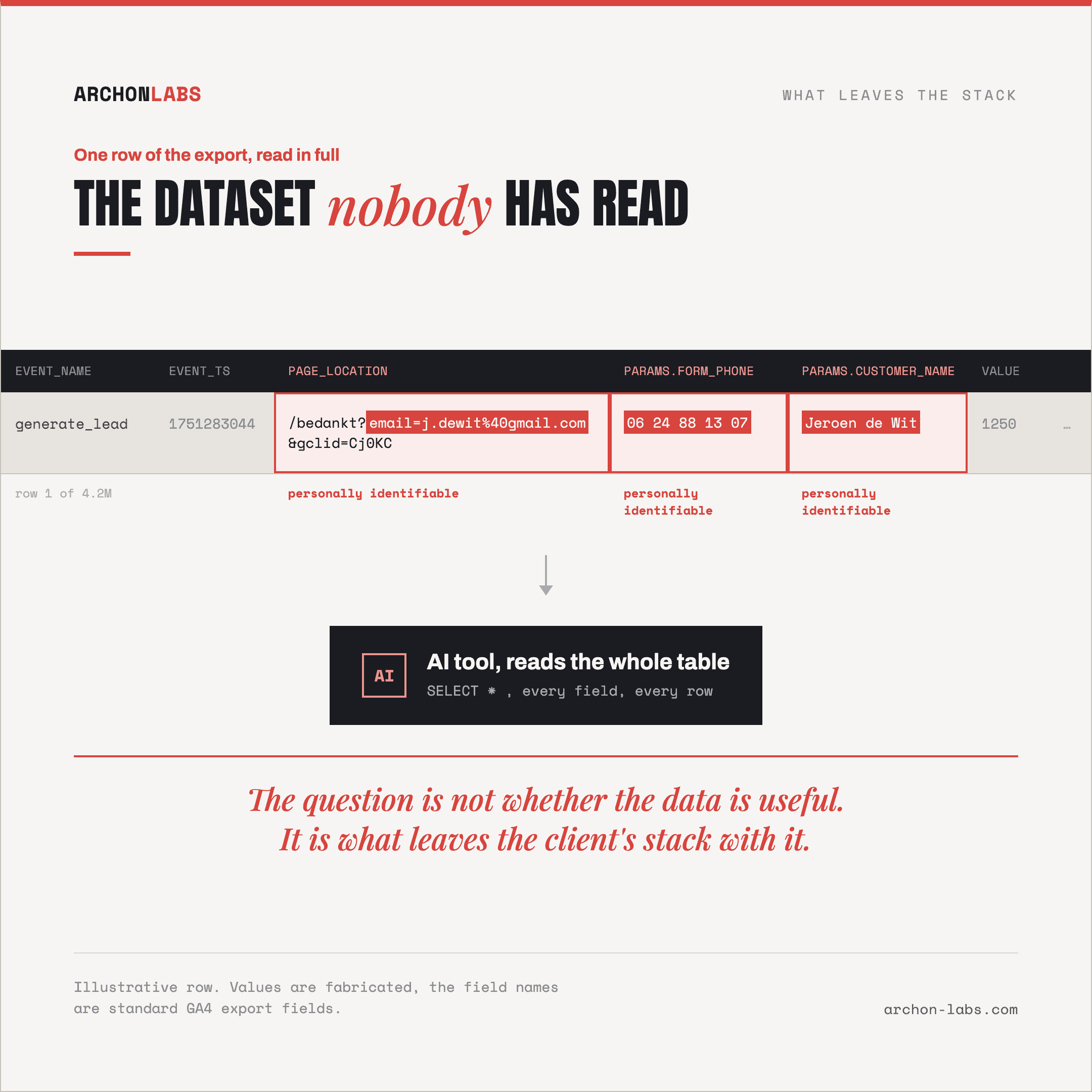
The second is starting at the warehouse at all. When 15-30% of conversions never arrive, the model reasons over a dataset that under-reports and reads the shortfall as weak performance, because a missing conversion and one that never happened are indistinguishable from inside the data. The third is handing over a dataset nobody has read: Google's own policy is that no data be passed to it that it could recognise as personally identifiable, and it ships redaction for email addresses and query-string values precisely because they do end up in event parameters. At Archon Labs the order is collection first, then definitions, then a read of what is in the fields, because a model never volunteers that the answer it just gave was built on the wrong column.