Value-based bidding is a Google Ads Smart Bidding approach that optimizes campaigns toward the total value of conversions rather than simply the number of them. It requires the account to report at least two different conversion values, whether real revenue or a proxy such as a lead score, so the algorithm has something to tell a valuable outcome apart from a cheap one. Google runs it through two strategies, Maximize conversion value with or without a Target ROAS, both bidding toward value instead of volume.
Why it matters for agencies
For an agency, moving a client's account onto value-based bidding is often pitched as an upgrade from chasing lead volume to chasing revenue, but the dashboard only shows that upgrade if the values behind it actually separate a good outcome from a mediocre one. Google's bidding still optimizes toward whatever number it is given, so a client can watch conversion value climb quarter over quarter while the leads underneath are no better than before, because the values reported never distinguished a closed deal from one that went nowhere. The report reads as progress on paper while the sales team keeps saying the leads have not improved, and that gap usually traces back to what was fed into the value field, not to the bidding strategy itself.
What teams get wrong
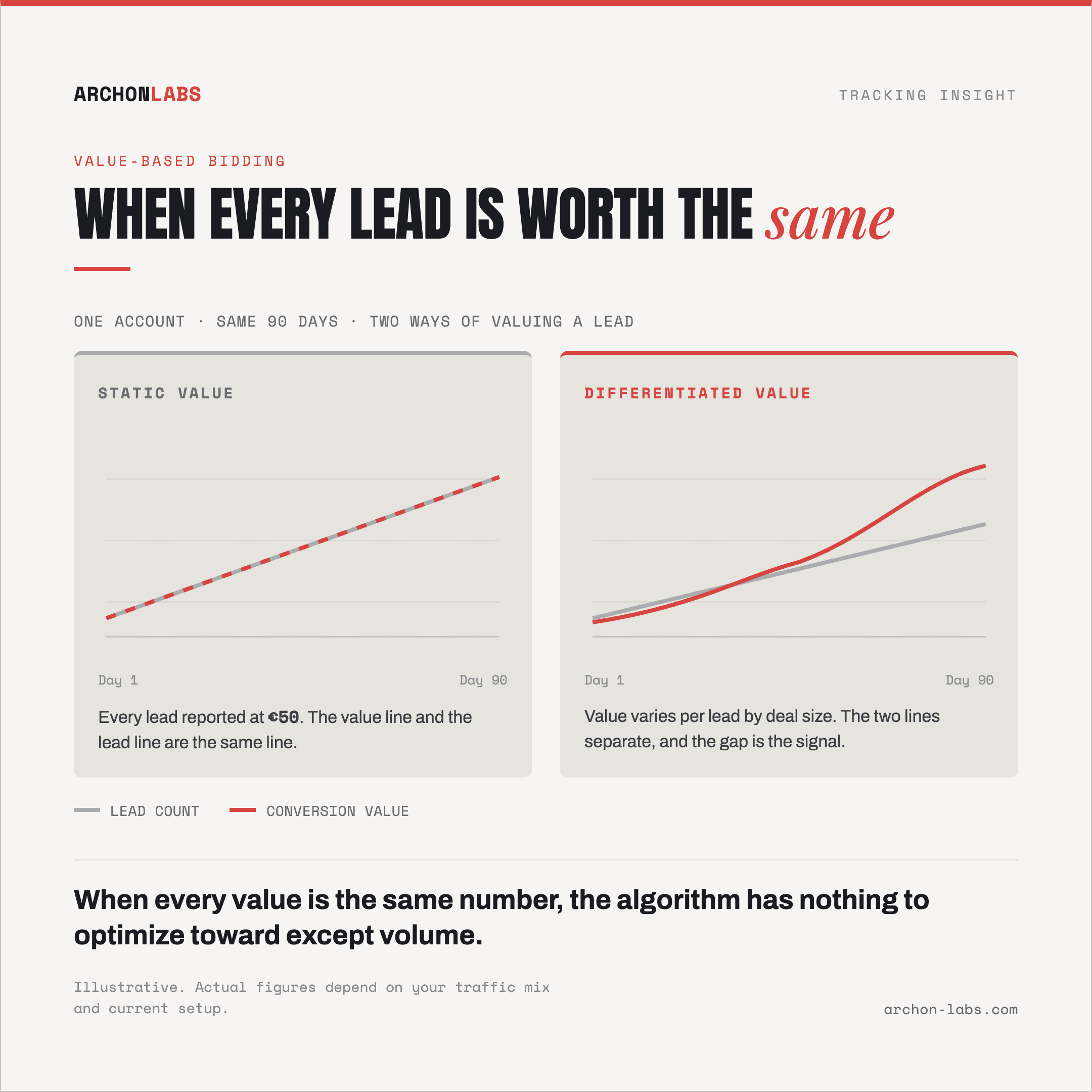
The most common failure is turning value-based bidding on without changing anything about how conversions are valued. Google's own documentation for Search and Shopping states plainly that the account has to report two or more different values across its conversion goals before the strategy can bid toward value at all. An account still sending every lead in at the same flat number, often left over from a plain Target CPA setup, technically runs value-based bidding while giving the algorithm nothing to tell a good lead from a bad one, so it keeps optimizing for volume under a different label.
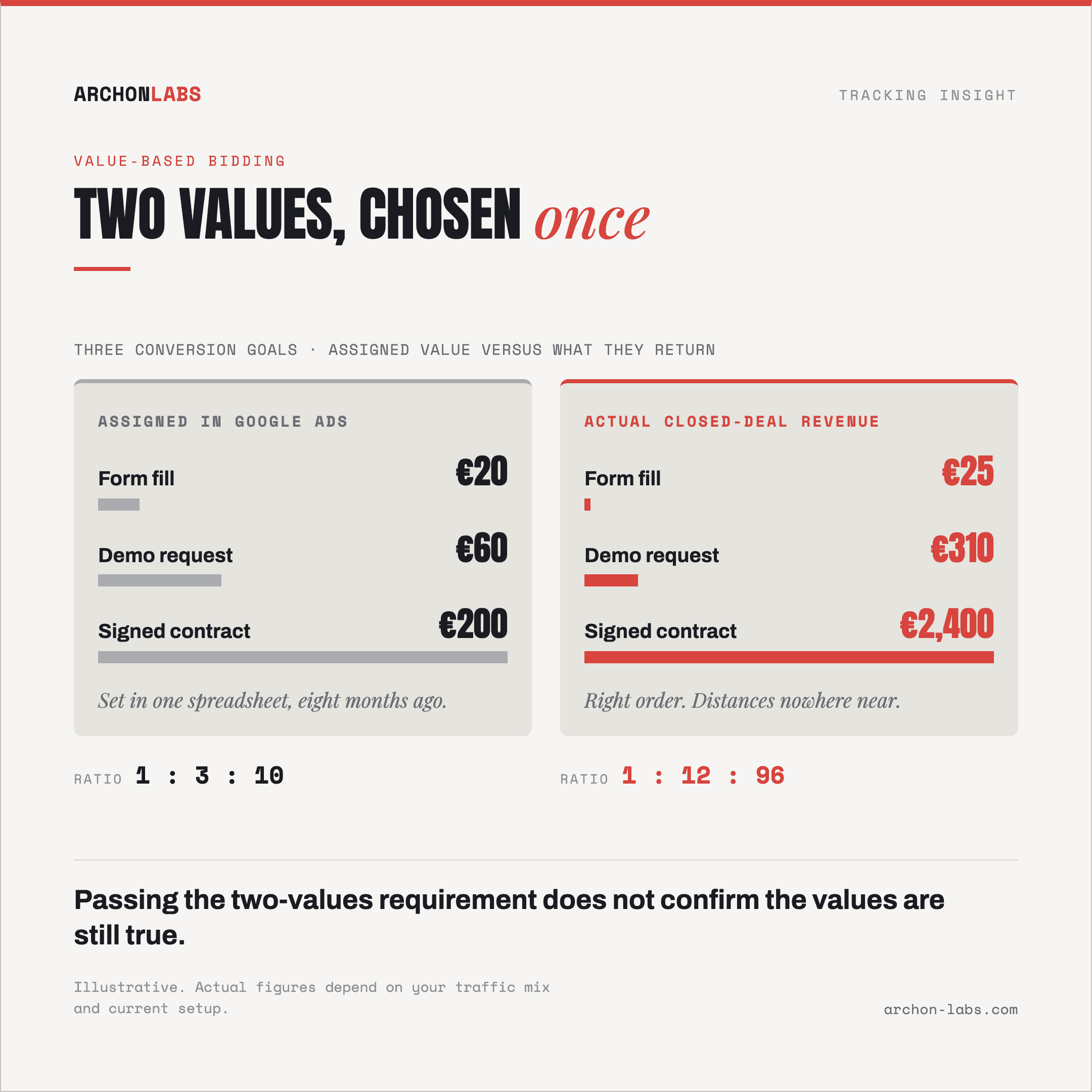
The second failure is assuming more than one value means the values are trustworthy. Two or more numbers satisfies what Google Ads requires, not what makes the numbers reflect the client's business. Archon Labs sees accounts that rank a form fill, a demo request and a signed contract in the right order but with numbers chosen once in a spreadsheet meeting and never checked against margin or close rate, so the algorithm optimizes precisely toward a hierarchy nobody has verified is the right one.
In depth: Archon Pixel