Consent rate is the share of website visitors who grant a specific category of cookie or tracking consent, most often analytics or advertising, out of everyone a consent banner reached. It is calculated as accepted decisions for that category divided by total visitors shown the banner, and because EU law treats a non-response the same as a refusal, a visitor who never clicks anything falls on the declined side of that calculation rather than out of it. Sessions, conversions and audience sizes downstream only ever include the visitors on the accepted side, so consent rate sets the ceiling on how much of a report is built from directly measured events at all.
Why it matters for agencies
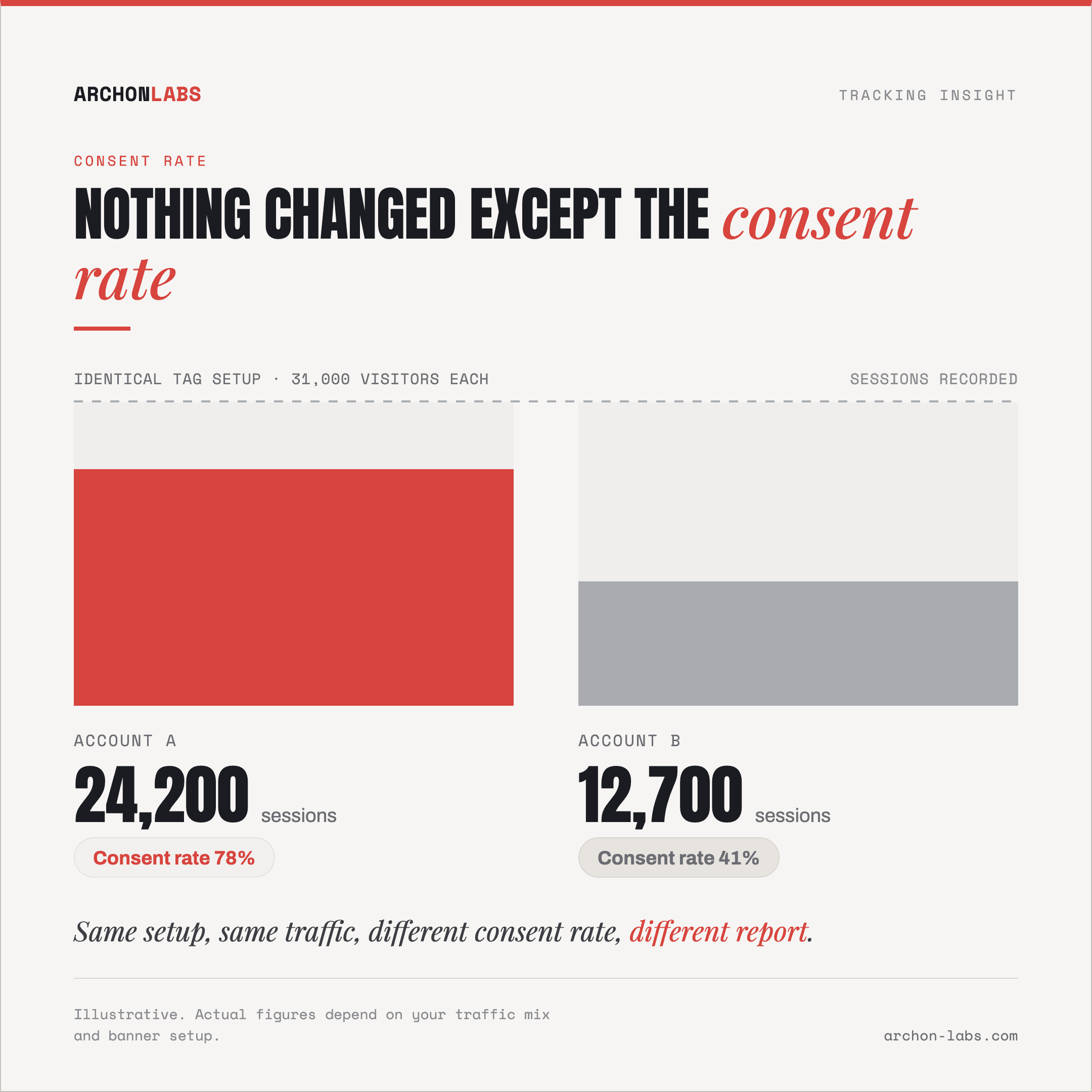
For an agency, consent rate is the variable behind why two accounts running an identical tracking setup report different volumes. A client asking why this month's numbers dropped is often really asking about the banner, not the tags: nothing in the setup changed, but the share of visitors who granted analytics consent moved because of a wording change, a new market, or a different device mix, and every session count, conversion total and remarketing audience downstream moved with it, quietly, with nothing in the interface flagging the cause.
What teams get wrong
The most common mistake is treating consent rate as a compliance setting rather than a measured metric. A banner gets installed once, usually on defensive defaults chosen to minimise legal exposure, and nobody checks the acceptance number again after launch, even as it quietly scales sessions, conversions and remarketing audiences every month it goes unreviewed. Archon Labs sees accounts where the rate is not tracked anywhere at all, not in the consent platform's own dashboard, not in the client report, not against any target, which means a real drop in it looks identical to a drop in the campaigns themselves.
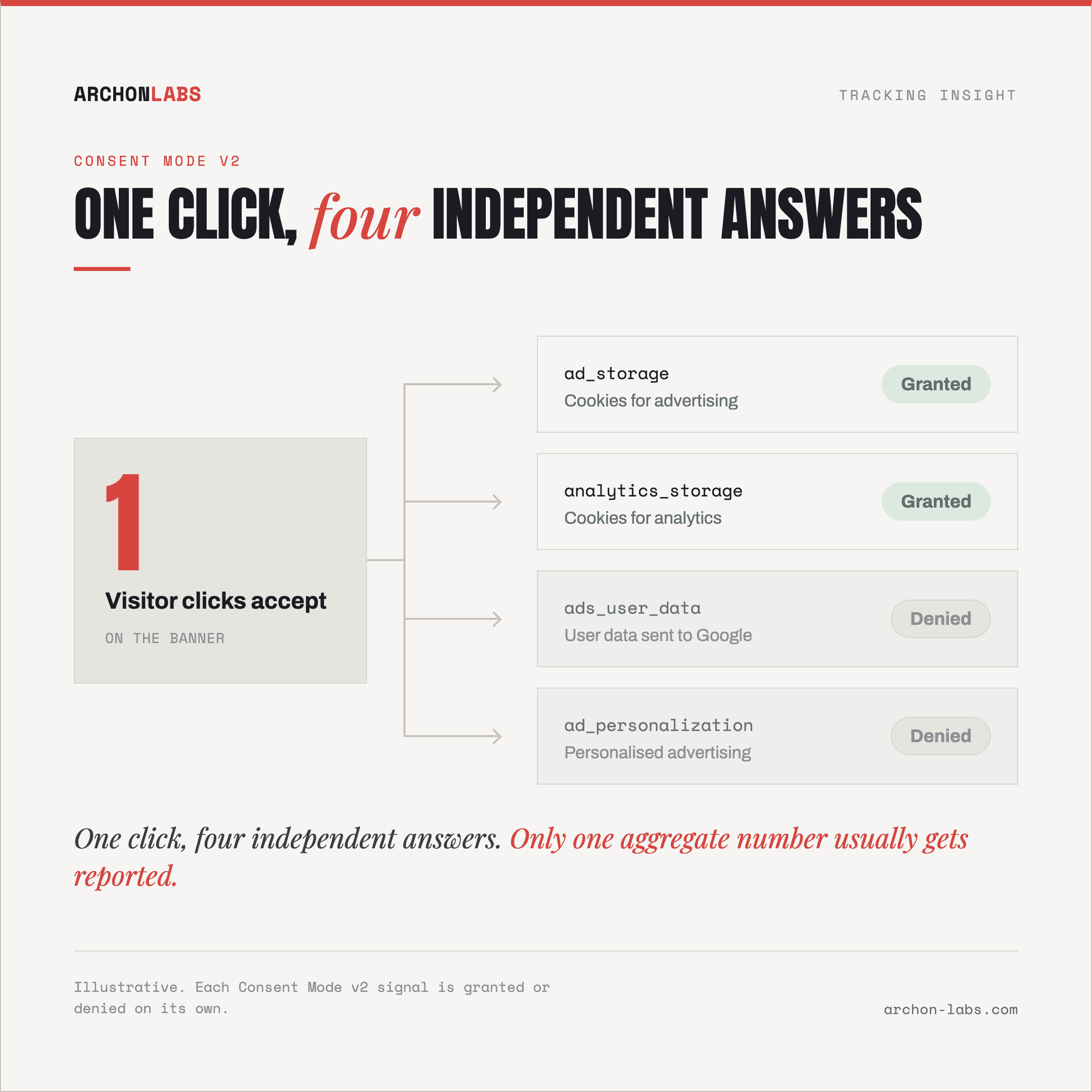
A second, more technical mistake is treating consent rate as one number. Google's Consent Mode documentation states that consent state can be granted or denied independently for each of its four signal types, covering ad storage, analytics storage, sending user data to Google, and ad personalisation, so a single visitor's click can register as acceptance for analytics and a refusal for ad personalisation at the same time. A dashboard reporting one aggregate acceptance percentage collapses that distinction, and a team chasing the consent rate without knowing which signal actually moved is often solving the wrong problem.