The symptom
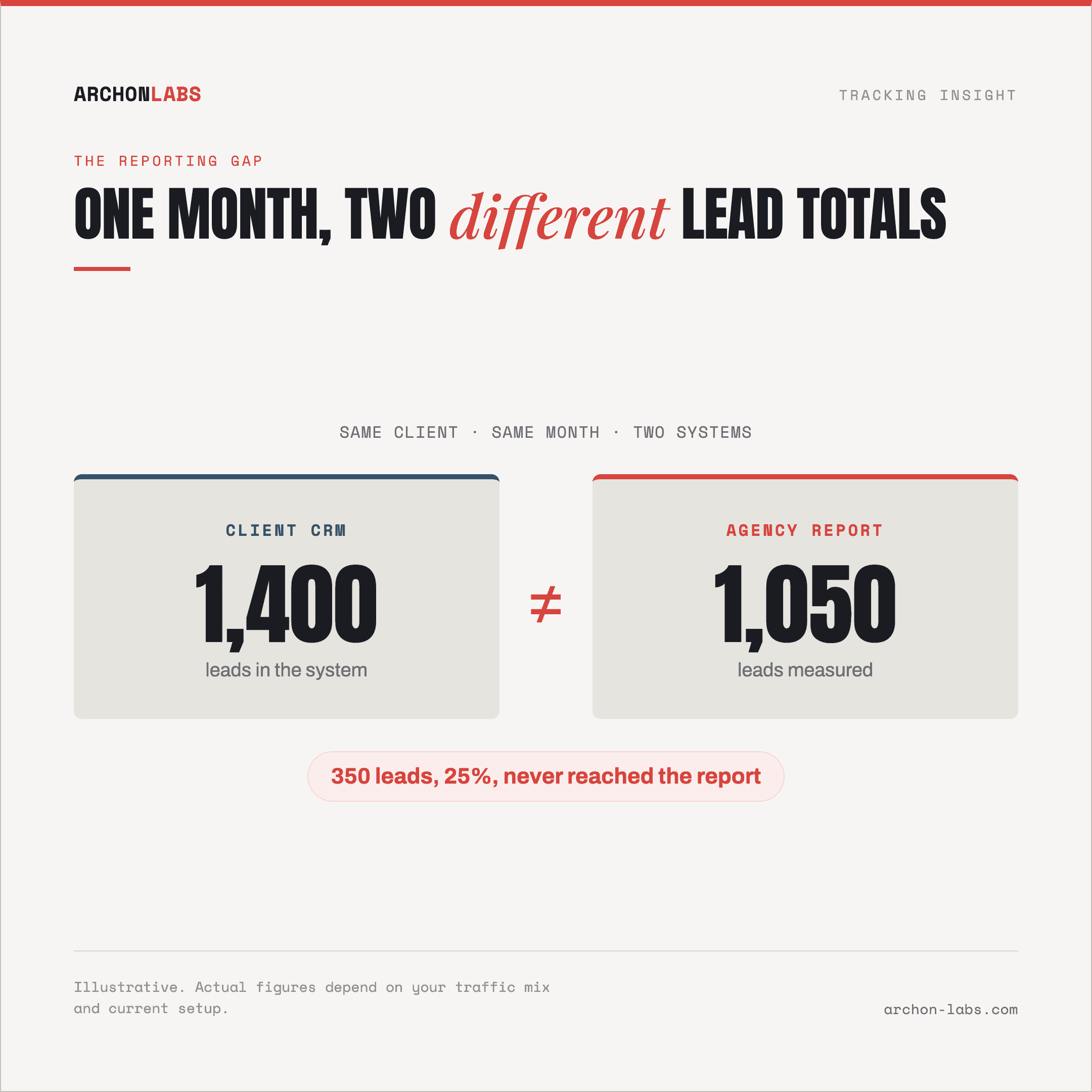
You found it. Maybe the client's CRM held more leads than your monthly report, maybe you checked before a server-side migration and the numbers did not survive it. Either way, the reporting you have sent for months was not measuring what the client thinks it was measuring.
The problem in front of you has nothing to do with tracking, it is a meeting: how to say this to somebody who has been making budget decisions on those numbers, without it becoming the reason they leave.
So the quiet option starts to look reasonable. Fix it, say nothing, let the numbers improve. That is the version that costs accounts, because the fix reports itself: measured conversions jump and somebody asks what changed. And if their analyst finds the gap first, you are not presenting a diagnosis, you are answering an accusation.
Why it happens
Most agencies get this backwards. They walk in ready to apologise, and most of what they found is not their mistake. It is documented behaviour, published by the platforms themselves, that nobody translated for the client when the reporting started. Separating the two is what makes the meeting survivable.
Most of the gap is documented, not broken
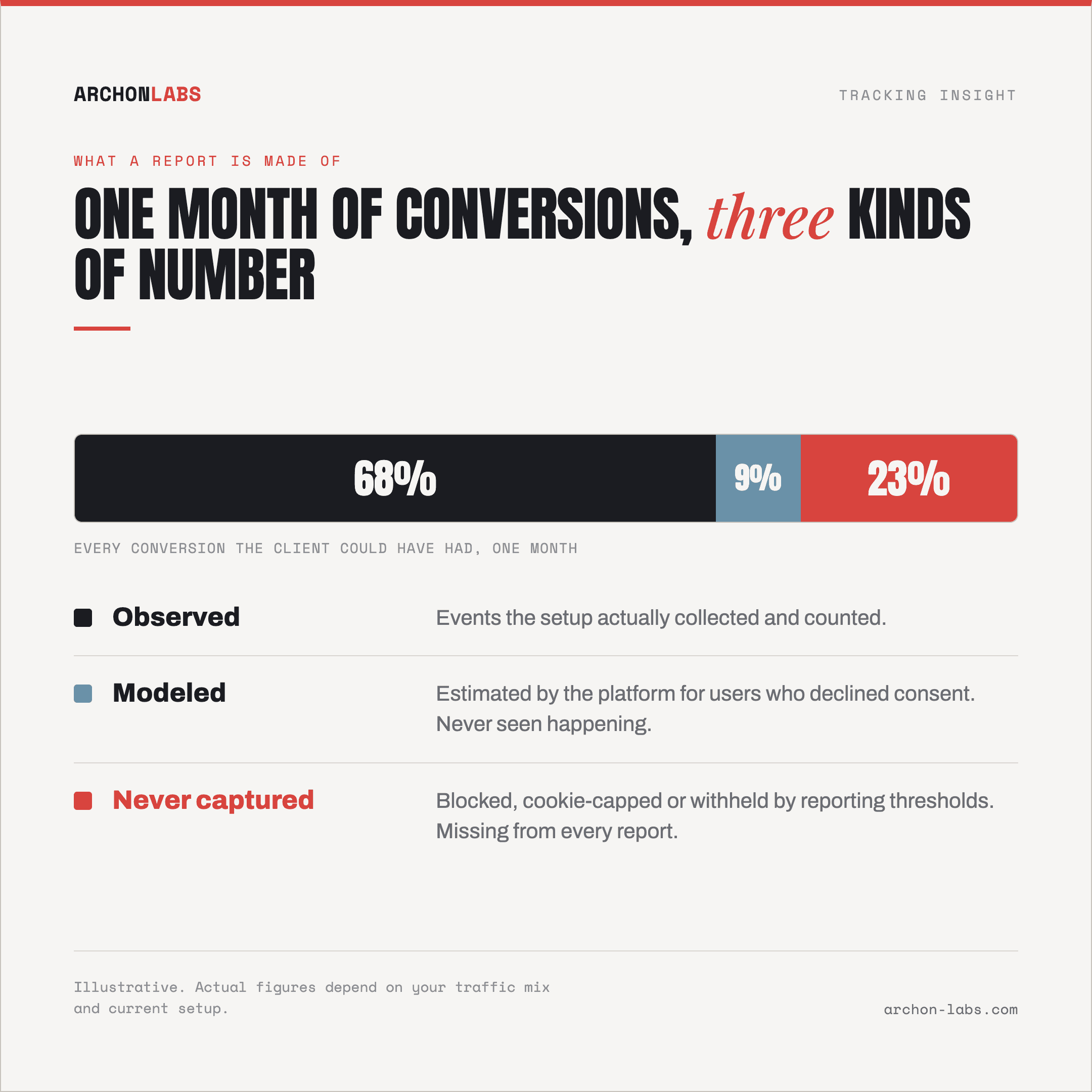
On a typical account 15 to 30% of conversions are never captured, and the causes are public. Safari caps how long a cookie set in the browser survives: per WebKit's own announcement, "ITP would cap the expiry of client-side cookies to seven days", and "cookies for cross-site resources are now blocked by default across the board". Ad blockers strip 30 to 40% of events before they leave the browser, and consent refusals remove more.
None of that is a misconfiguration, it is the environment the setup runs in, and we took the mechanics apart in why conversions never reach GA4. The framing that matters in the meeting: the reports were incomplete, which is not the same as wrong.
Part of what you reported was modeled, not observed
This surprises agency owners most: some of the conversions in those reports were never seen happening.
When consent is declined, GA4 fills the hole statistically. In Google's own words, "behavioral modeling for consent mode uses machine learning to model the behavior of users who decline analytics cookies based on the behavior of similar users who accept analytics cookies". A catch for smaller clients: modeling only switches on above volume thresholds, among them a property collecting "at least 1,000 events per day" from users who declined for at least seven days. Below that, nothing is modeled and the loss sits in the report as a lower number.
Reporting holds rows back too. Google Analytics withholds them to protect identifiable users, and per the Analytics documentation, "data thresholds are system defined. You can't adjust them". So a delivered report is neither a clean count nor a fabrication, it is a mix of observed events, modeled estimates and withheld rows, and almost no client has been told that.
The platforms disagree by design
The client's first question is usually "so which number was right". There is no single answer, and pretending otherwise is what gets an agency caught out later.
Google Ads books a conversion against the click, not the purchase: "the primary conversion columns mentioned above are calculated based on the time of the click, not the time of the conversion", per Google Ads Help. Its own discrepancy documentation lists nine separate factors that make two tools disagree, and notes that "conversions can be reported up to 90 days after the click". A month you closed and reported on can still be moving a quarter later.
So the answer is that it depends, and you can say what on: which date the conversion is attributed to, how long the lookback window is, which attribution model applies, and whether the platform counted events it observed or estimates it modeled. Specifics keep a client's trust. Picking whichever number looks better loses it.
Nobody set the expectation at the start
This is the one item that genuinely is the agency's to own. If the reporting never carried a stated margin, and nobody said which numbers were observed and which were estimated, any correction later reads as an admission rather than an update. The gap was always there. Only the sentence that would have made it a known quantity is missing.
What good looks like
Run the conversation in this order. The sequence does more work than the wording.
Direction first, then size. Tell them which way the correction goes before you explain anything. If the cause was measurement loss, the campaigns performed at least as well as you reported and probably better, so you are revising upward, which is not the meeting they are braced for. If it runs the other way, from a duplicate tag or a self-referral inflating a channel, say so in the first minute without softening it. Finding that out late is what gives a client a legitimate reason to be angry.
Put the vendor page on screen instead of an apology. Read the Safari or Google Analytics documentation out loud. It moves the subject from "our agency made an error" to "here is how these platforms work and what it cost you". You are showing your work, and the client can verify each line.
Separate the restatement from the fix. Two decisions, not one: what happens to the historical reporting, and what changes going forward. On the first, draw a line at a date and keep the delivered reports as they were, with a note explaining the gap. A quietly recut dashboard is the thing clients remember. Then give them one number to trust and the date it starts from.
Name what it changed in decisions, not just in reporting. Clients care about this most and agencies mention it least. When 15 to 30% of conversions never arrive, the bidding algorithms optimised against that gap for months, so budget went to campaigns that looked worse than they were. The cost was not an inaccurate slide, it was misallocated spend.
Then fix the measurement layer, and be precise about the ceiling. Server-side collection typically recovers 15 to 40% more conversions and moves cookie lifetime from the 1 to 7 days a browser allows to as much as 400 days. Archon Signal is the service that does that work. Say the limit in the same breath: a good setup collects up to roughly 95% of events, never all of them, because consent refusals and blockers do not go away. Promising the gap is closed entirely just schedules the next uncomfortable meeting.
For one performance agency, that work brought 38% of affected client traffic back into measurement, lifted measured conversions by 26% on average, and saved 14 hours per project. A 26% uplift is plainly visible, which is the practical argument for having this conversation before the fix, not after.
The best version of this meeting is the one where you found the problem yourself, early, with a fix already scoped. Checking a new account before you take over its reporting, or an existing one before a migration, turns the dreaded conversation into a credibility moment. That is what a tracking audit covers.
Frequently asked
Do we have to tell them at all if we can just fix it quietly?
You can try, but the fix reports itself. Recovered conversions show up as a step change in the client's own dashboard, so the question arrives anyway, later and without you controlling the framing. Disclosing it is also the only version where you get credit for finding it.
How far back do we restate the reporting?
It depends on what the client used those reports to decide. If the numbers only fed monthly performance reviews, a note explaining the gap from a stated date is enough. If they drove budget allocation or a target somebody is measured against, rework the period that decision rested on and nothing beyond it.
Will they not blame us for missing it for so long?
Some will ask, and the answer holds up: the causes are documented platform behaviour, the platforms changed underneath the setup, and you are the party who found it. That answer only works while it is true, which is why finding it before their analyst does matters.
Can you have this conversation for us?
Either way works. Most agencies keep the client relationship in their own hands and want the diagnosis to come from outside their team, so we supply the findings and the documentation and you decide what the client hears and when. When it helps, we join the call as the specialist instead.
If you would rather find out what your client accounts are actually measuring before somebody else does, request a free tracking audit.