The symptom
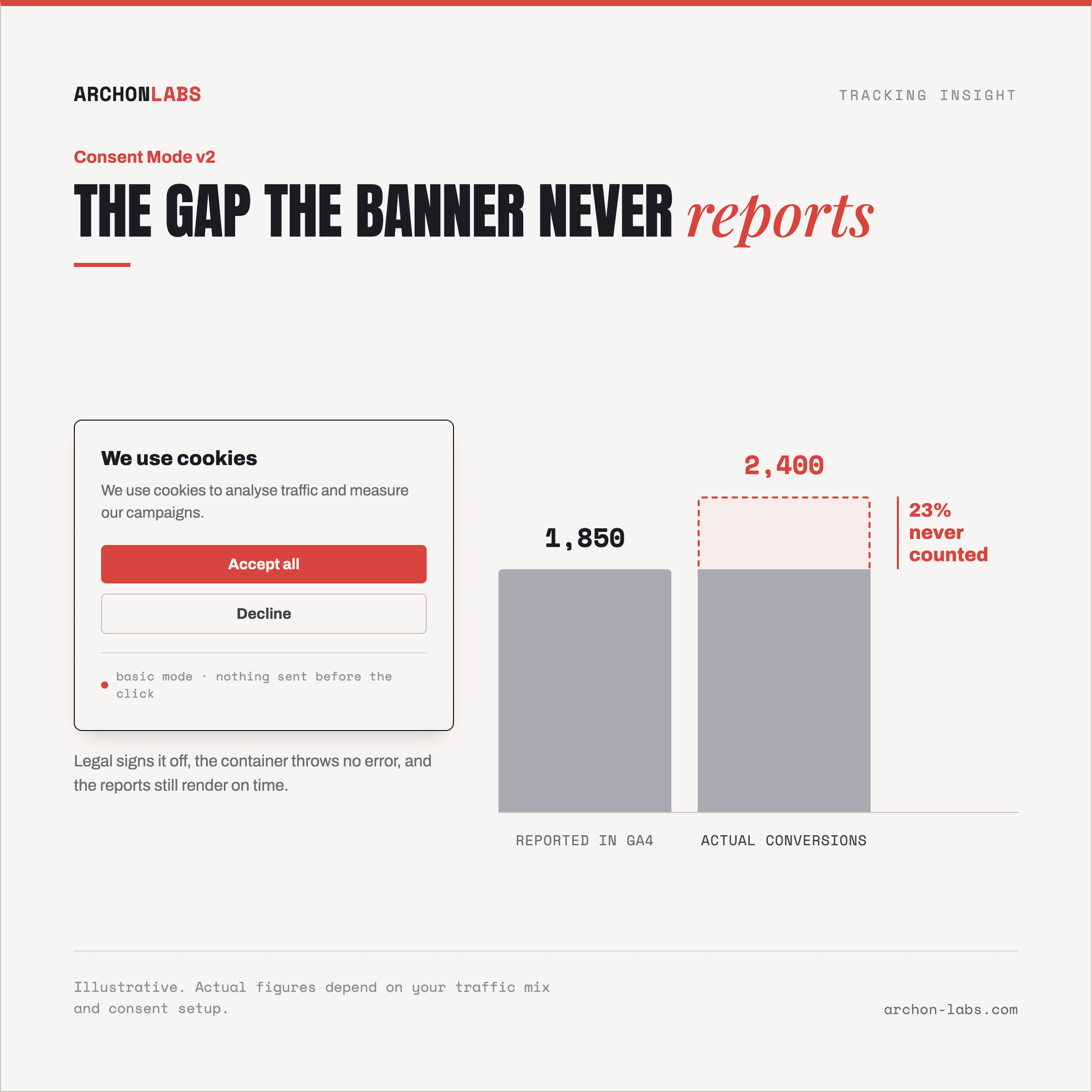
A client ships a new cookie banner, legal signs it off, and a few weeks later the conversion numbers look thinner than they should. Nobody can say by how much, because the only comparison available is last month, and last month had different spend, different creative and a different campaign mix.
Then the question lands on the call: how much are we losing because of the banner? Most agencies can only answer "some". That is an uncomfortable thing to say to a client who just paid for a compliance project, and it is what almost everyone says.
What makes it hard is that the loss does not present as a loss. Sessions still arrive, conversions still fire, reports still render on time. There is no error in the container and no red number in the dashboard, just a total that is quietly smaller than the business behind it.
Why it happens
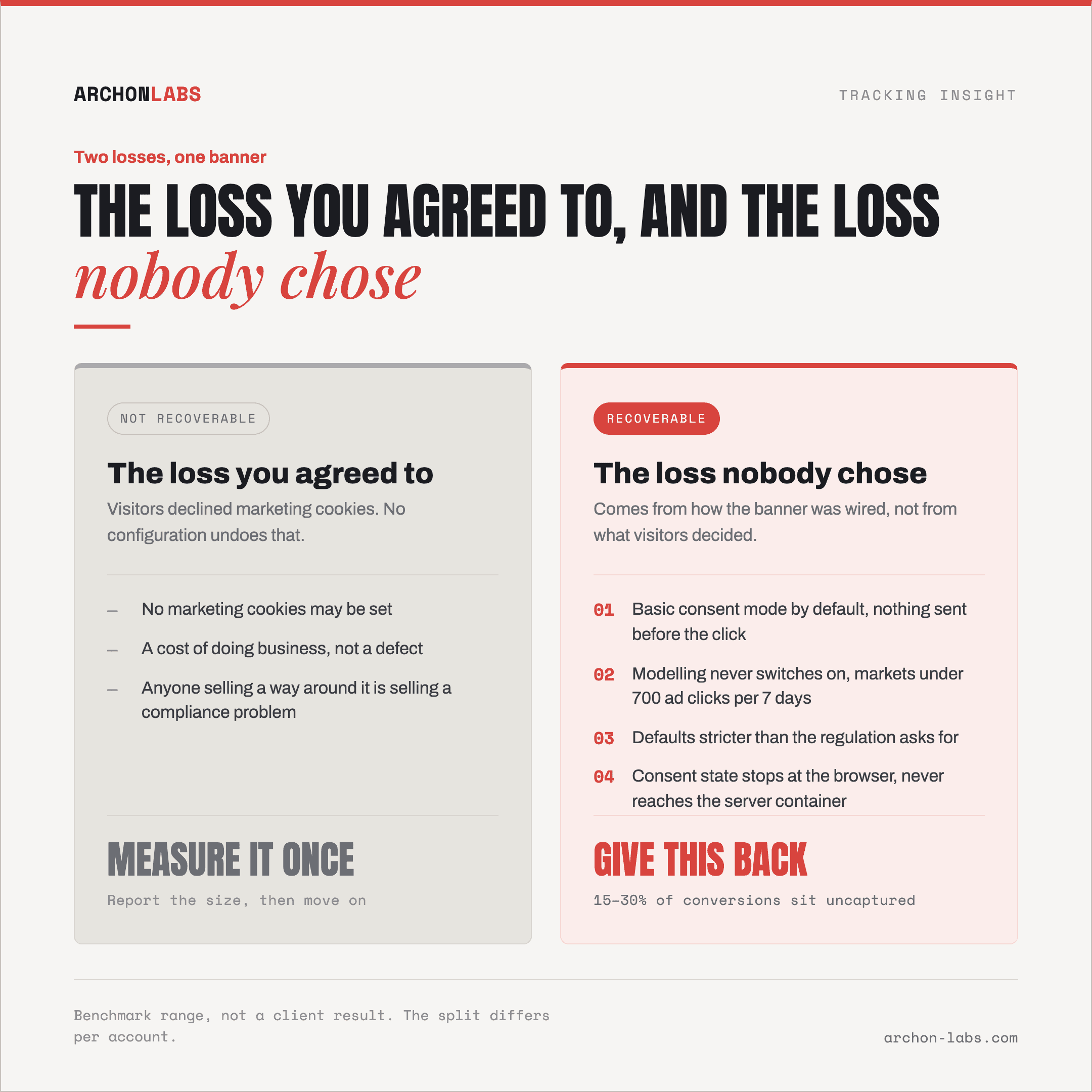
Two different losses sit on top of each other here, and treating them as one is why the question never gets a real answer.
The loss you agreed to. If a visitor declines marketing cookies, you do not get to set marketing cookies. No configuration undoes that, and anyone selling you a way around it is selling you a compliance problem. This part is a cost of doing business, and the only useful thing to do with it is measure it, so the client knows its size instead of guessing.
The loss nobody chose. This is the part worth your attention. It comes from how the banner was wired rather than from what visitors decided, it is invisible in every report you send, and unlike the first kind it is recoverable.
The most common cause is the mode the banner runs in. Google documents two. In basic consent mode, tags are, in Google's wording, "blocked until user interaction with a consent banner", and nothing is sent before the visitor decides, not even the consent status itself. In advanced consent mode, tags load with defaults set to denied, and when someone declines, the consent state and a measurement without cookies still reach Google. Both behaviours are documented in Google's tag platform documentation. Plenty of setups run basic without anyone having decided to, because that is what the plugin does out of the box.
The second cause is modelling that never switches on. Agencies assume Google quietly fills the consent gap back in. It does, but only under conditions: Google Ads Help states that modelling needs a correct consent mode implementation plus "a daily ad click threshold of 700 ad clicks over a 7 day period, per country and domain grouping". Split a mid-sized client across five European markets and several of them will never clear that bar. The gap stays open, and nothing in the interface tells you which markets are affected.
The third cause is defaults set stricter than the regulation asks for. Analytics storage denied by default in regions where that was never required, consent categories mapped to the wrong tags, a banner that blocks the entire Google Tag Manager container instead of the tags that actually need permission. Each of these is a ten second decision made during implementation, and each one throws away measurement you were allowed to keep.
The fourth is consent state that stops at the browser. A consented visitor's signal has to travel with the event into the server container and on to the ad platforms. When that wiring is missing, traffic that did consent gets handled downstream as though it had not, which is the most expensive silent failure of the four.
Then there is everything that has nothing to do with consent at all. Ad blockers strip 30 to 40% of tracking events before they leave the browser, and short cookie lifetimes cut the window in which a return visit can still be tied to the campaign that earned it. Stack the consent losses on top of those and a typical account carries 15 to 30% of its conversions permanently uncaptured, with the bidding algorithms spending real budget against that thinned picture. We went through the mechanics in why conversions never reach GA4.
What good looks like
The goal is not a higher consent rate. Nudging visitors into accepting is how agencies end up explaining themselves to a regulator. The goal is to know which of the two losses you are looking at, and to give back only the second one.
That starts with a measurement, not a purchase. Establish what share of traffic actually declines, what the banner does before anyone clicks, whether modelling is active in each market you buy media in, and whether consented traffic survives the trip to the platforms. Once those four things are known, "how much is the banner costing us" stops being a worry and becomes a list with a number next to each line.
Then repair the parts that were never required. Defaults set to what the regulation asks and no stricter, consent categories mapped to the right tags, the container left free to run the tags that need no permission, and consent state carried through to the server side so it is respected rather than assumed. That is the job Archon Consent does: a lightweight banner with Consent Mode v2 wired so it stops discarding the measurement you are allowed to keep.
What that is worth depends on the account. For one performance agency we worked with, cleaning up tracking prevention and consent handling brought 38% of affected client traffic back into measurement, lifted measured conversions by 26% on average, and saved 14 hours per project against handling it in-house. Recovered consent data also decides whether the rest of the setup pays back, which is the same test we ran on the server-side business case.
Frequently asked
Is advanced consent mode still compliant?
Yes, when it is implemented correctly. Advanced mode does not set cookies for someone who declined, it sends a signal without cookies instead, which is a different thing both technically and legally. What decides compliance is whether your defaults, your categories and your documentation match what the banner promises the visitor. We implement the technical side, legal sign-off on policy stays with you and your client.
Our banner is a plugin from a consent platform, is that not enough?
A plugin puts a banner on the page and records the click. It does not know which of your tags need consent, whether your server container ever receives the consent state, or whether modelling is active in Sweden but not in Denmark. That wiring is where compliant and measurable is won or lost, and it is not part of what a consent platform ships.
How do we put a number on this for the client?
Measure the four things above per account, then price only the recoverable half. Declined traffic is a fixed cost, so report it once and move on. The recoverable part is what you take into the client conversation, with the specific misconfiguration named next to it. That turns a vague worry into a scoped piece of work with an owner.
Will fixing consent change our reported numbers mid-quarter?
Usually yes, upward, and it is better to say so before it happens than after. Conversions that were being discarded start being counted, so a period over period comparison across the change is not a clean read. Mark the date in the reporting and flag it in the next review.
Do we have to replace the banner we already have?
Often not. If the current banner is sound we configure Consent Mode v2 around it rather than force a swap, because the banner itself is rarely the thing that is broken.
If you want to know what a client's banner is really costing, and how much of that you never had to pay, request a free tracking audit and we will measure it per account.